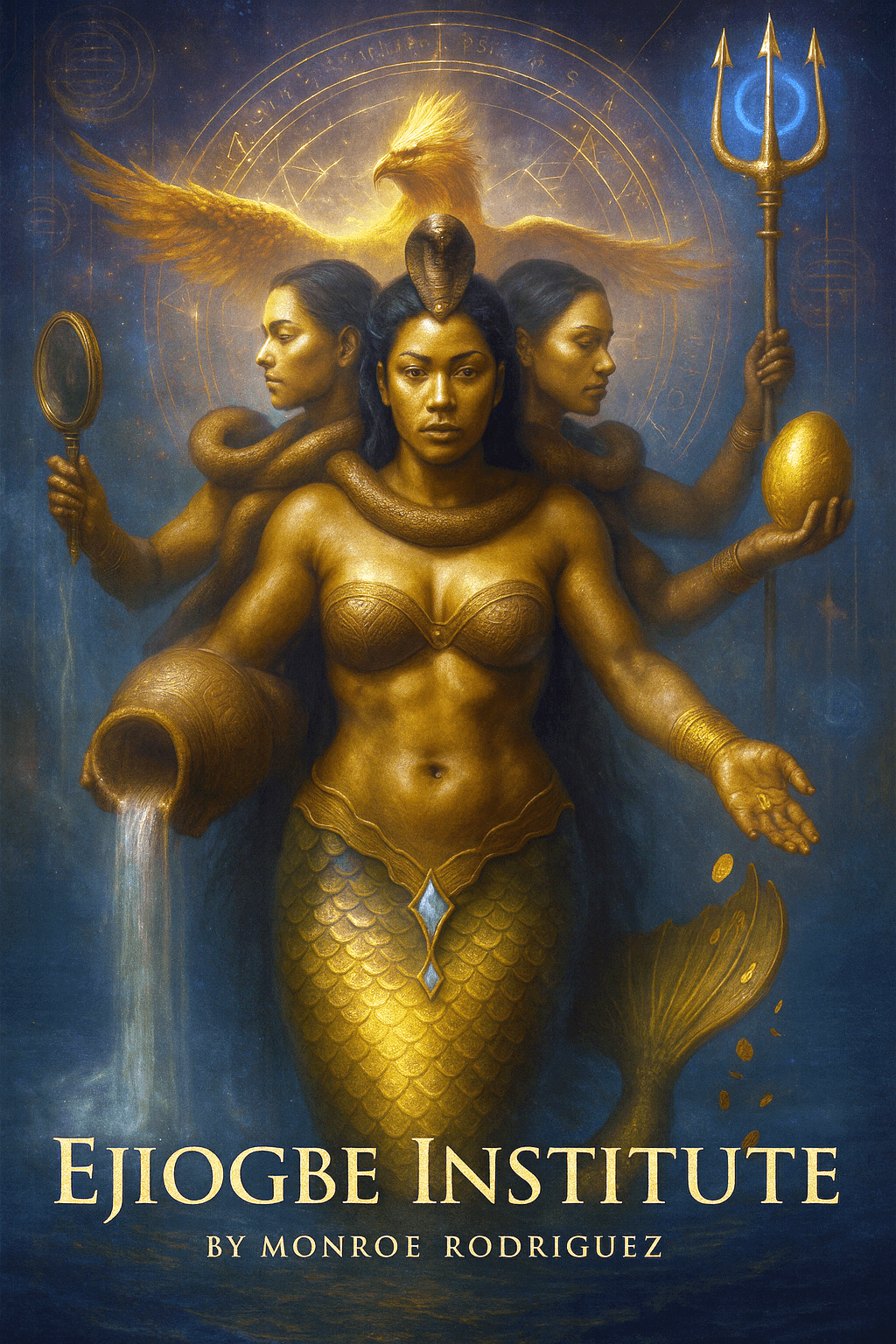

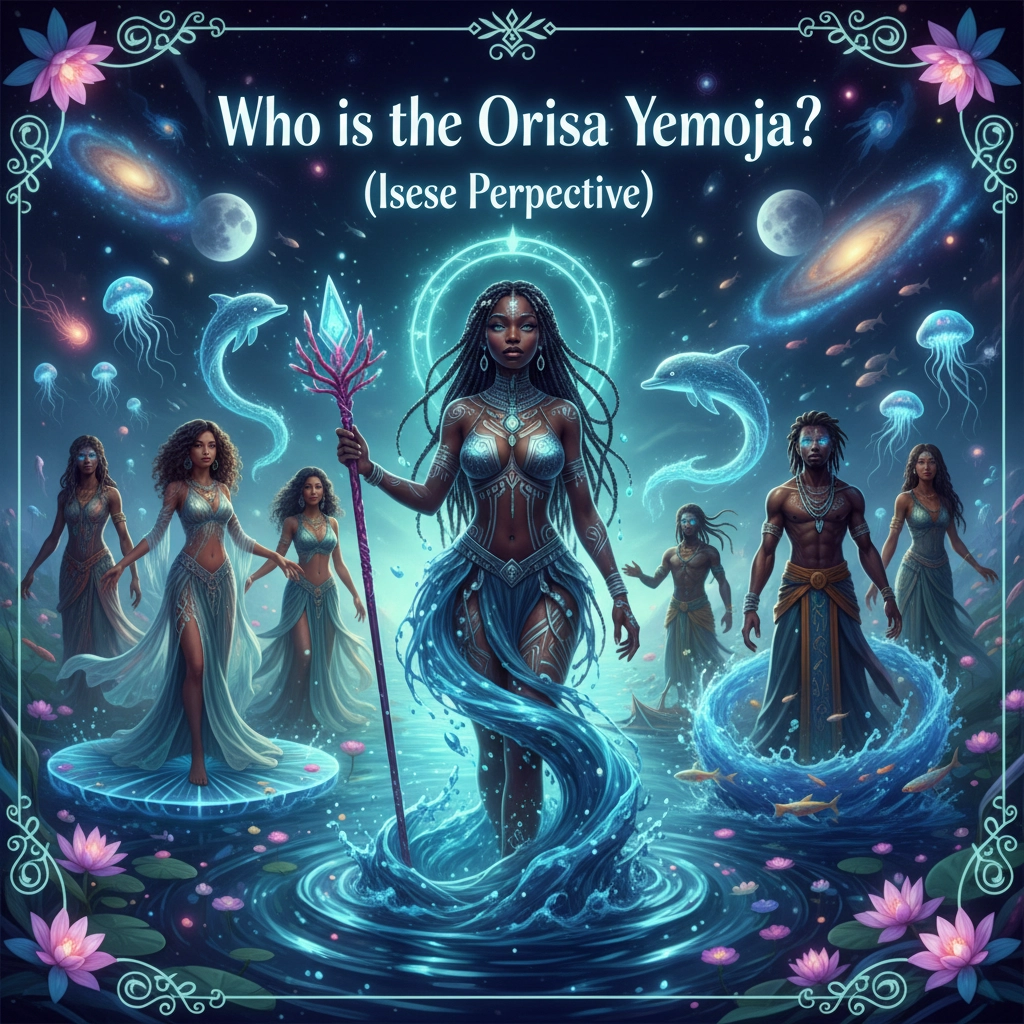
Ready to meet one of the most powerful and nurturing forces in Yoruba spirituality? Let's talk about Yemoja – and I mean the real Yemoja, not the Hollywood mermaid fantasy you've probably seen floating around social media.
If you've been drawn to water, if you feel that deep maternal calling, or if you're just tired of the watered-down (pun intended) versions of African spirituality, you're in the right place. We're diving deep into who Yemoja actually is according to Isese – the traditional Yoruba spiritual practice that's been flowing strong in Nigeria for thousands of years.
The Real Mother of Waters
Yemoja's name tells you everything you need to know: "Yeye Omo Eja" translates to "Mother whose children are like fish." Think about that for a second. Fish don't survive outside water – they need that nurturing, life-sustaining environment to thrive. That's exactly what Yemoja represents: the ultimate maternal force that provides the essential foundation for all life.
In Isese tradition, she's recognized as the Mother of all Orisas. While Obatala holds the title of Father of all Orisas, Yemoja is the universal mother – the one who birthed and nurtures the divine forces that govern our world. She's not just an Orisa among the 401 in the Yoruba pantheon; she's THE mother figure that holds everything together.
But here's what most people get wrong: in her African homeland, Yemoja is primarily a river deity. She's not the ocean goddess that diaspora traditions have made her out to be. Her true domain is the Ogun River in Nigeria, and while she can visit all bodies of water (because water connects everything), the river is her actual home and realm of power.

Her Character Will Challenge You
Are you ready for some tough love? Because that's exactly what Yemoja brings to the table. She embodies unconditional maternal love, yes – but she's also stern, strict, and won't coddle you when you're being irresponsible with your spiritual practice.
Yemoja represents that type of mother who loves you fiercely but will call you out when you're not living up to your potential. Among all the Orisas, she's known for not losing her temper easily. She's patient, nurturing, and protective. But when she's had enough? When devotees ignore her shrines, neglect their spiritual duties, or disrespect her traditions? She can turn destructive through floods and will take her sweet time before answering your prayers again.
This isn't the gentle, always-available mother figure that some people want her to be. She's the mother who knows that real love sometimes means tough boundaries and consequences. She governs fertility, healing, and emotional restoration – but she demands respect and proper reverence in return.
Think about it: would you want a spiritual guide who just tells you what you want to hear, or one who actually helps you grow? Yemoja chooses growth, even when it's uncomfortable.
Her Role in Traditional Yoruba Spirituality
Within Isese, Yemoja is part of a sophisticated spiritual system that uses the Ifa oracular tradition – what practitioners call "ancient technology" containing 256 chapters of vast spiritual knowledge. This isn't some New Age interpretation; this is a time-tested spiritual framework that has guided Yoruba people for millennia.
She governs what women are traditionally known for: childbirth, nurturing, and the deep emotional currents that connect all humanity. But don't box her into just "feminine" energy. Yemoja represents the primal waters from which all life emerged – that's universal, cosmic power that transcends gender limitations.
Her influence extends far beyond individual healing. She's about community bonding, cultural heritage preservation, and maintaining the sacred connection between humanity and the natural world. When you work with Yemoja in the traditional Isese context, you're not just seeking personal healing – you're connecting with ancestral wisdom and contributing to the continuation of sacred traditions.

The Power of Water as Spiritual Medicine
Here's something that might shift your perspective: Yemoja's domain over water isn't just symbolic. Water is literally life – your body is mostly water, the planet is mostly water, and every healing process in your body requires water. When Yemoja governs water, she's governing the actual substance that sustains existence.
In traditional practice, her healing extends to physical, emotional, and spiritual restoration. She cures infertility, brings emotional balance, and helps people flow through life's challenges with grace. But this isn't passive healing – it requires your active participation, respect, and commitment to spiritual growth.
Are you someone who struggles with emotional regulation? Yemoja teaches you how to be like water – adaptable, persistent, and powerful while maintaining your essential nature. Are you dealing with creative blocks or fertility issues? She provides the flowing, generative energy needed to bring new life (literal or metaphorical) into existence.
Traditional Colors and Symbols
In Africa – and this is crucial – Yemoja's color is white. Pure white. Her devotees wear white clothing, white beads, and her shrine is adorned entirely in white. If you've been seeing her represented in blue because of diaspora traditions like Santería or Candomblé, that's a later development, not the original African practice.
Her wealth is represented by cowrie shells – those beautiful, curved shells that were once used as currency across Africa. When you see cowries in traditional Yemoja worship, you're looking at symbols of abundance, prosperity, and her connection to the economic flow that sustains communities.
The white symbolizes purity, clarity, and the pristine nature of flowing river water. It represents her role as the cleansing, purifying force that washes away spiritual and emotional contamination.

What Working with Yemoja Actually Looks Like
Stop romanticizing this path. Working with Yemoja in the traditional Isese context requires dedication, respect, and proper training. You can't just light a blue candle, throw some offerings at a body of water, and call yourself a devotee.
Traditional Yemoja practice involves:
- Proper initiation and training from qualified Isese practitioners
- Understanding the complex ritual protocols and taboos
- Learning the specific songs, prayers, and ceremonies in Yoruba language
- Maintaining regular shrine obligations and offerings
- Developing the emotional maturity to handle her direct guidance
She's not interested in casual spiritual tourism. Yemoja wants devotees who are committed to personal growth, community responsibility, and preserving authentic tradition. If you're looking for easy spiritual shortcuts or Instagram-worthy rituals, look elsewhere.
Her Message for Modern Practitioners
Here's what Yemoja is teaching us right now: authenticity matters. In a world full of spiritual appropriation and surface-level practices, she's calling people back to the deep, transformative work of traditional spirituality.
She's tired of being reduced to a mystical mermaid or a gentle water goddess who grants wishes. She's the Mother of all Orisas – a powerful, complex deity who demands respect, proper training, and genuine commitment.
If you feel called to work with Yemoja, start by learning about authentic Yoruba culture and Isese practice. Connect with legitimate practitioners who can guide you properly. Stop trying to piece together her worship from random internet sources and social media posts.
Ready to go deeper than surface-level spirituality? Ready to connect with the real Yemoja – not the commercialized version, but the powerful maternal force who has been guiding Yoruba people for thousands of years?
Your spiritual ancestors are waiting. The question is: are you ready to do the real work?
The river is calling. Will you answer with the respect and dedication she deserves?
