
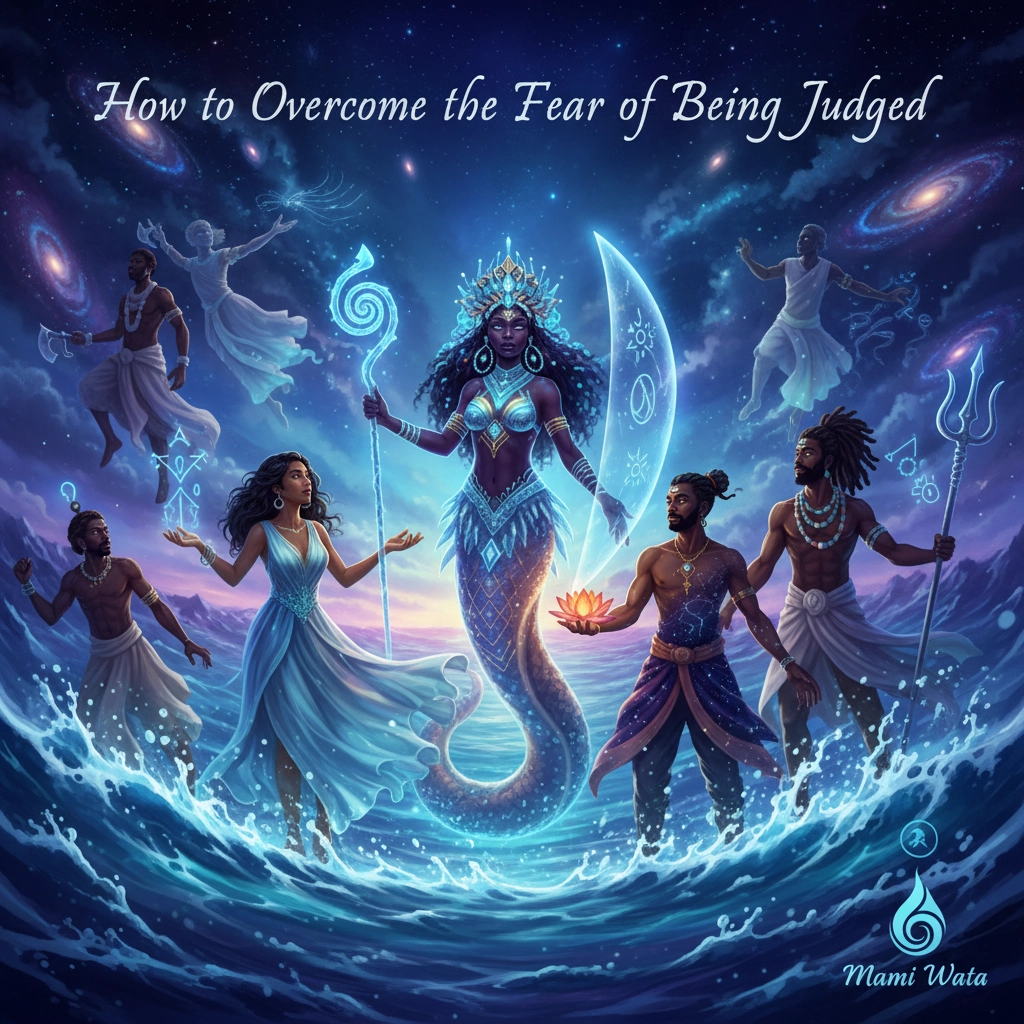
Let's keep it real for a minute. You've felt the call to connect with your ancestral traditions, maybe you're drawn to Mami Wata's flowing waters, feeling pulled toward Ifa divination, or sensing Sango's thunder calling your name. But then that familiar knot forms in your stomach: What will people think?
That fear of judgment hits different when you're walking a spiritual path that others don't understand. Your family might think you've "lost your mind," friends could make jokes about "voodoo," and don't even get me started on what some folks at work might whisper behind your back. But here's what I need you to understand: that fear is keeping you from claiming what's already yours.
Why This Fear Feels So Real
The fear of judgment around African spiritual practices carries extra weight because of centuries of colonization, missionary interference, and systematic demonization of our traditions. Your ancestors literally had to hide their spiritual practices to keep them alive. That survival mechanism is still running in your DNA, making you hypersensitive to others' opinions about your spiritual choices.
But here's the thing, we're not hiding anymore. We don't have to practice in the shadows or apologize for connecting with the wisdom our ancestors died protecting. That fear you're feeling? It's ancestral trauma trying to keep you "safe" in a world that no longer requires that kind of hiding.

Are you going to let fear rob you of your spiritual birthright? Because that's exactly what's happening when you silence your inner knowing to please people who don't even understand what they're judging.
Your Ancestors Didn't Survive for You to Play Small
Think about this: every single one of your ancestors survived long enough to have children. They survived slavery, colonization, forced conversion, and countless attempts to strip away their spiritual identity. They kept the traditions alive by any means necessary, sometimes practicing in secret, sometimes blending with other religions, sometimes paying the ultimate price for their beliefs.
You think they did all that so you could worry about what Karen from accounting thinks about your cowrie shell bracelet?
Your ancestors are literally waiting for you to step into your power. They're tired of watching you dim your light because someone might have an opinion. The spirits chose you for a reason, and part of that reason is to help normalize and honor these traditions in the modern world.
Start Small, Build Confidence
You don't have to announce your spiritual journey on Instagram or wear full traditional dress to the grocery store (unless that's your calling, in which case, go off!). Start building confidence in smaller ways:
Create sacred space at home. Set up a small altar or shrine where you can connect with your guides and ancestors privately. This builds your spiritual muscle without external pressure.
Learn the history. The more you understand about your traditions, the more confident you'll feel defending or explaining them. Knowledge is power, and when you can speak intelligently about Yoruba cosmology or the significance of water in Mami Wata traditions, judgment loses its sting.
Practice daily rituals. Simple morning prayers, ancestor acknowledgments, or evening gratitude ceremonies help you feel grounded in your practice. The stronger your personal connection, the less others' opinions matter.

Connect with like-minded people online. Join spiritual communities on social media or forums where you can share experiences and get support from people walking similar paths.
Handling Family Judgment
Family judgment hits the hardest because these are the people whose love and acceptance we crave most. When your mother tells you you're "messing with the devil" or your partner rolls their eyes at your spiritual practices, it cuts deep.
Here's how to handle it:
Set boundaries early and consistently. "I respect your beliefs, and I need you to respect mine. This is important to me, and I'm not open to debate about it." Then stick to it. Don't explain, justify, or argue, just redirect the conversation.
Lead by example. Let your spiritual practice make you a better person. When they see you becoming more peaceful, confident, and aligned, it's harder to argue with the results.
Don't try to convert anyone. Your job is to walk your path, not to drag others along. The more you try to convince them, the more resistant they'll become.
Remember, their fear isn't about you. When people react strongly to your spiritual choices, they're usually dealing with their own religious trauma, fear of the unknown, or cultural conditioning. Their judgment says nothing about you and everything about their own unresolved issues.
Building Your Spiritual Confidence
Stop asking for permission to be yourself. You don't need anyone's approval to connect with Osun by the river or to light candles for your ancestors. These practices are your birthright, not a privilege granted by others' acceptance.
Trust your experiences. When you feel that energy shift during ritual, when you receive clear guidance from your spirits, when synchronicities start flowing, trust that. Your direct spiritual experience trumps anyone's secondhand opinion.
Study with legitimate teachers. Find authentic practitioners who can guide your learning. The more grounded you are in proper practice, the more confident you'll feel. Check out resources like ifa-divination to deepen your understanding.

Own your choices. Stop apologizing for your spiritual path. You don't owe anyone an explanation for why you choose to honor your ancestors or work with traditional healing methods. "This works for me" is a complete sentence.
Creating Supportive Community
You can't do this alone. Find your tribe, people who understand your journey and support your spiritual growth. This might mean:
- Joining local spiritual communities or cultural centers
- Attending workshops and ceremonies
- Building relationships with other practitioners online
- Working with spiritual mentors who can guide your development
The more you surround yourself with people who celebrate your authenticity, the less power outside judgment has over you. Your spiritual community becomes your shield against negativity and your source of encouragement when doubt creeps in.
The Real Cost of Playing It Safe
Here's what nobody talks about: the cost of hiding your true self is always higher than the temporary discomfort of judgment. When you suppress your spiritual calling to avoid criticism, you're not just missing out on personal growth, you're depriving the world of your unique gifts.
Maybe you're supposed to be the healer your community needs. Maybe your openness about traditional practices will give someone else permission to explore their own heritage. Maybe your confidence in walking this path will inspire others to reconnect with their roots.
But none of that can happen if you're hiding in the spiritual closet, worried about what people might think.

Your Spiritual Journey Is Non-Negotiable
Listen, people are going to judge you no matter what you do. They'll judge you for being too spiritual, not spiritual enough, too traditional, too modern: there's literally no way to win the judgment game. So you might as well do what feels authentic to you.
Your connection to Mami Wata, to the Orisa, to your ancestors: that's sacred. That's not up for public vote or family approval. That's between you and the spirits who called you to this path.
Stop giving your power away to people who don't even understand what they're criticizing. Stop dimming your light to make others comfortable with their own darkness. Stop apologizing for being exactly who your ancestors prayed you would become.
The fear of judgment will always be there in some form: that's just part of being human. But you get to choose whether that fear controls your life or just exists in the background while you do the work you came here to do.
Your spiritual practice isn't a hobby you can turn on and off based on social approval. It's who you are. It's your legacy. It's your contribution to keeping these sacred traditions alive for the next generation.
So the question isn't whether people will judge you: they will. The question is: are you going to let their judgment stop you from claiming your spiritual inheritance?
The ancestors didn't preserve these traditions through centuries of persecution just for you to abandon them because of what people might think. They kept the flame burning so you could walk in the light.
Time to stop hiding. Time to stop apologizing. Time to step fully into who you were always meant to be.
The spirits are waiting. Your ancestors are cheering you on. And somewhere out there, someone needs to see you living authentically so they can find the courage to do the same.
What are you waiting for?
