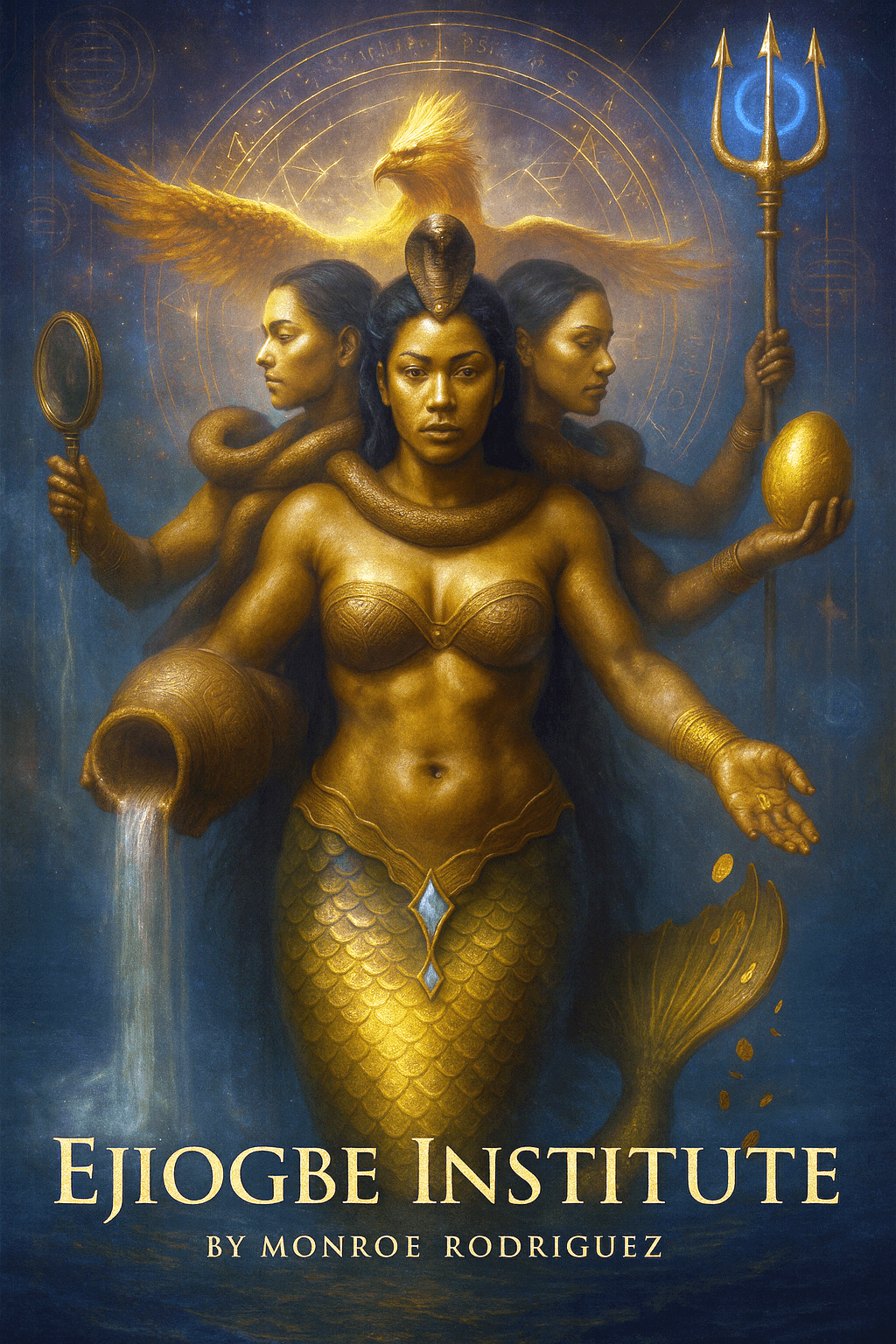


Ever felt that pull toward something deeper? That knowing in your bones that you're meant for more than what you're currently living? Maybe you've been drawn to African spiritual traditions, felt called to ancestral practices, or wondered if initiation is in your future. Here's what I need you to understand: what is for you is absolutely, undeniably for you. No force in this universe can keep it from you when the time is right.
But here's the thing: and this is where patience becomes your spiritual superpower: divine timing doesn't operate on your schedule. It operates on ancestral wisdom, cosmic alignment, and the deep knowing of the spirits themselves.
The Sacred Gate: Understanding African Initiation
In African and Afro-diasporic spiritual traditions, initiation isn't just a ceremony you sign up for like a weekend workshop. It's a sacred transformation that fundamentally rewrites your spiritual DNA. Whether we're talking about becoming an initiated priest in the Orisa tradition, receiving asen in Vodun, or being called into the mysteries of Mami Wata, these aren't casual commitments.

Think of initiation as the difference between visiting someone's house and becoming family. You can appreciate a tradition from the outside, learn about it, even practice certain elements. But initiation? That's when the ancestors say, "This one belongs to us now."
In Igbo indigenous rites, young people don't choose their spiritual path: the path chooses them. The elders watch, the spirits whisper, and when someone is ready (truly ready, not just eager), the doors open. This isn't gatekeeping; it's divine protection. Because once you cross that threshold, there's no going back to who you used to be.
Why the Spirits Make You Wait (And Why You Should Thank Them)
Are you wondering why that spiritual door hasn't opened yet? Why you feel called but can't seem to find your way in? Let me tell you something that might sting a little but will ultimately set you free: the spirits are protecting you from yourself.
Initiation in traditions like Candomblé or Santería isn't just about gaining spiritual power: it's about dying to your old self and being reborn as someone who can handle that power responsibly. The spirits know if you're ready for that level of transformation. They know if you can handle the isolation that sometimes comes with deep spiritual work. They know if you're prepared for the responsibility of carrying ancestral wisdom.
Your job isn't to convince them you're ready. Your job is to become ready.
This means doing the inner work. Healing your relationship with your ancestors. Learning to serve others without expectation. Developing discipline, humility, and genuine reverence for the traditions that called to you in the first place.
The Mami Wata Path: When the Water Calls
In Mami Wata traditions, initiation often begins with dreams, visions, or intense water experiences. People report being visited by serpent imagery, feeling irresistibly drawn to bodies of water, or experiencing profound healing through water rituals. But here's what's beautiful: Mami Wata doesn't force herself on anyone. She calls, she invites, she offers glimpses of her power: but she waits for genuine readiness.

If you've been feeling Mami Wata's pull, trust that process. Start with simple water offerings. Learn about her cultural significance. Respect the communities where her worship originated. And most importantly, understand that being called doesn't automatically mean being chosen for initiation. Sometimes the call is to support, to learn, to be an ally rather than a priest.
Orisa Consciousness: Beyond the Social Media Spirituality
Let's talk about Orisa tradition for a minute, because this is where a lot of people get confused. Seeing beautiful imagery of Osun, reading about Sango's power, or feeling drawn to Esu doesn't automatically mean you're meant to be initiated. In traditional Yoruba practice, priesthood is typically inherited through family lineages or revealed through divination by experienced elders.
The Orisa choose their priests, not the other way around. And they're notoriously particular about it. They'll test your patience, your commitment, your ability to handle sacred responsibility. They'll make you prove that your interest isn't just spiritual tourism or a quest for personal power.
If you're genuinely called to Orisa worship, start with legitimate Ifa divination through trained priests. Learn the proper protocols. Understand that this path requires lifelong commitment to service, not just to the Orisa but to the community they've chosen you to serve.
Vodun Mysteries: When the Lwa Claim You
In Haitian Vodou and West African Vodun, initiation often comes after years of being "ridden" by the spirits: experiencing possession, receiving messages, or having your life dramatically rearranged by spiritual forces. The lwa don't make polite requests; they make demands. And they'll keep escalating until you acknowledge their claim on you.
But even then, proper initiation requires community recognition, elder guidance, and extensive preparation. The spirits might claim you, but the community confirms you. This balance between personal calling and collective acknowledgment is what keeps these traditions strong and authentic.

If you suspect you're being called by the lwa, find a legitimate house, observe protocols, and be prepared for a journey that will challenge everything you thought you knew about yourself and your place in the spiritual world.
The Indigenous Igbo Path: Ancestral Recognition
In traditional Igbo spirituality, certain individuals are recognized from childhood as having special spiritual gifts. These might manifest as unusual sensitivity, prophetic dreams, or natural healing abilities. But recognition is only the beginning: proper training can take decades.
Igbo spiritual initiation often involves intensive apprenticeships with master practitioners, learning complex cosmologies, and developing relationships with specific ancestral and nature spirits. It's not something you can study online or learn from books. It requires direct transmission from qualified elders.
Trust the Process: Your Spiritual Development Timeline
Here's what I need you to understand: if something is truly meant for you, nothing can keep it from you. Not racism, not gatekeepers, not your own self-doubt. But if something isn't meant for you, all the wanting in the world won't make it yours.
This doesn't mean you should be passive. It means you should be strategically patient. Use this time to:
- Develop genuine relationships with practitioners in the traditions that call to you
- Study the history and cultural context of these practices
- Work on your own spiritual foundation: meditation, ancestor reverence, ethical living
- Serve your community in whatever capacity you can
- Learn the language if you're called to non-English traditions
Red Flags: When "Calling" Becomes Spiritual Bypassing
Not every spiritual urge is a genuine calling. Sometimes what feels like destiny is actually unhealed trauma, spiritual materialism, or a desire to escape your current life circumstances. Ask yourself honestly:
- Are you running toward this tradition or away from something else?
- Do you want the power and prestige, or are you genuinely prepared for service and sacrifice?
- Have you done the work to heal your relationship with your own ancestral traditions?
- Are you willing to be a student for years before becoming a teacher?
The Patience Practice: Waiting with Purpose
While you're waiting for spiritual doors to open, don't waste the time. Every traditional practitioner I know spent years preparing before formal initiation. They learned languages, studied histories, developed discipline, built community relationships, and most importantly, they learned to trust divine timing.

This waiting period isn't punishment: it's preparation. The spirits are watching to see if you can handle delayed gratification, if you can serve without recognition, if you can maintain devotion even when the path isn't clear.
When the Door Opens: Recognizing True Calling
You'll know when it's real. The signs will be undeniable, the synchronicities will multiply, and legitimate practitioners will begin to recognize something in you that you might not even see in yourself. The door won't just crack open: it will swing wide, and you'll have no doubt that you're supposed to walk through it.
But remember: being called doesn't make you special. It makes you responsible. It means the ancestors have work for you to do, and they've chosen you as a vessel for their continuation in this world.
Your Spiritual Sovereignty: Owning Your Path
Whether you're meant for initiation or simply called to be a devoted practitioner, your spiritual journey is valid. Not everyone is meant to be a priest, but everyone can develop a meaningful relationship with ancestral wisdom.
What is for you will always be for you. Trust that. Trust the spirits. Trust the process. And most importantly, trust that your authentic spiritual path: whatever it looks like: is exactly where you need to be.
The ancestors didn't survive centuries of oppression, slavery, and cultural assault just so their spiritual traditions could be diluted or misappropriated. They survived so that the right people, at the right time, with the right intentions, could carry their wisdom forward.
If that's you, you'll know. And when you do, you'll understand why you had to wait.
