
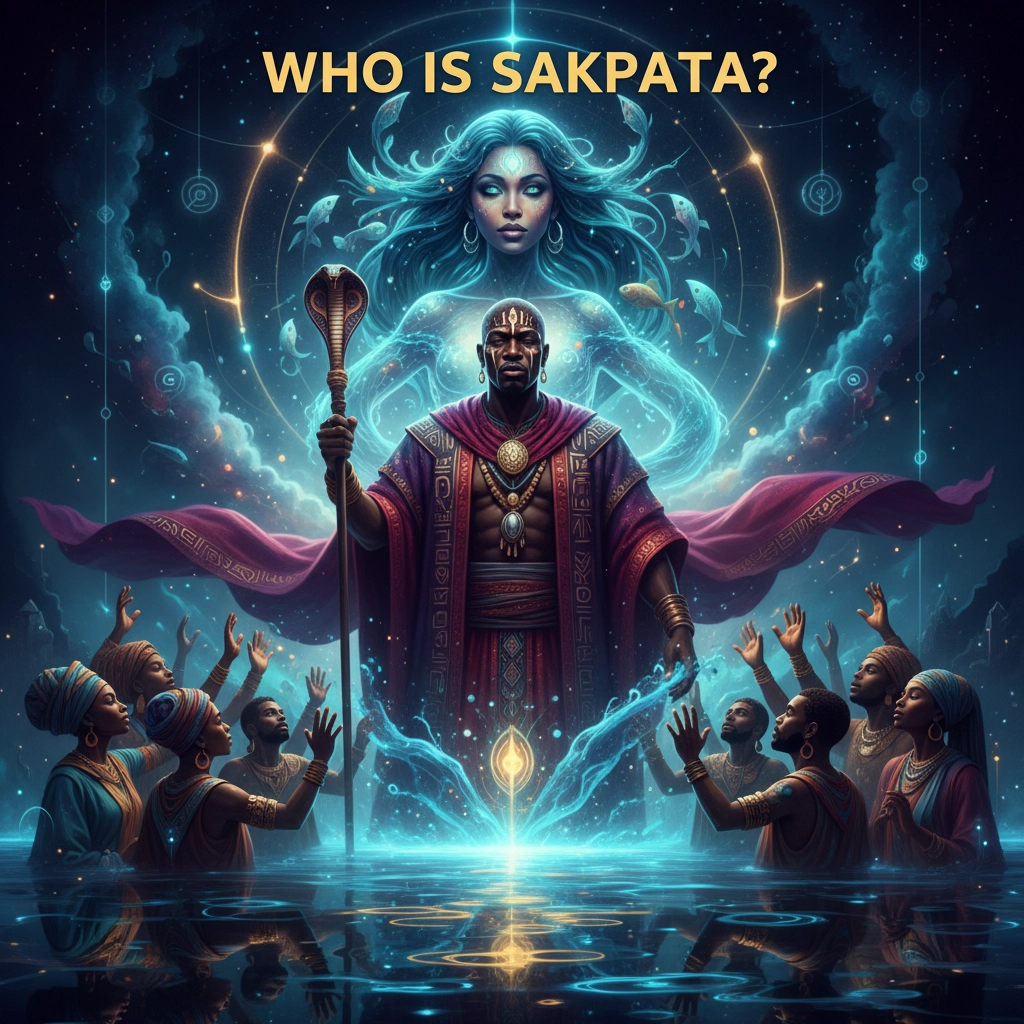
Ever wonder why some spiritual forces feel both terrifying and protective at the same time? Meet Sakpata: the Fon deity who'll teach you that real power isn't about being comfortable. He's the god who controls both disease and healing, earth and fertility, destruction and renewal. And if you're feeling called to understand deeper African spirituality, this is one deity you need to know about.
Sakpata isn't just another spirit you can casually invoke when you need a favor. This is serious, ancestral power that demands respect, understanding, and proper approach. Are you ready to dive into the complex world of one of West Africa's most feared and revered deities?
The Earth God Who Controls Life and Death
Sakpata (also known as Sagbata or Sopona) stands as one of the most powerful deities in the Fon religion of West Africa, primarily worshipped in Benin and Togo. But here's what makes him unique: his name doesn't just refer to one individual deity. "Sakpata" encompasses an entire pantheon of earth gods, making this spiritual force vast and multifaceted.
Think about it: when you're dealing with the earth itself, you're not just talking about dirt and rocks. You're engaging with the foundation of all life, the source of food, medicine, and shelter. Sakpata governs all of this, but he also controls smallpox: one of history's most devastating diseases. This isn't a contradiction; it's spiritual reality at its most raw and honest.

The duality here isn't about "good versus evil": it's about recognizing that the same forces that sustain life can also take it away. Sakpata teaches us that real spiritual power doesn't come with guarantees of comfort or safety. It comes with responsibility and respect.
The Healer Who Can Also Harm
Here's where Sakpata gets really interesting, and where many people make their first mistake in understanding African spirituality. This deity doesn't fit into neat Western categories of "benevolent" or "malevolent." He's both, simultaneously, because that's how nature actually works.
As the steward of fertility, Sakpata ensures abundant harvests and sustains agricultural communities throughout West Africa. Farmers and communities have depended on his blessings for centuries, understanding that their survival literally depends on staying in his good graces. But that same power that brings life-giving crops can unleash devastating epidemics.
Feeling uncomfortable yet? Good. That discomfort is telling you something important about approaching African spirituality with the seriousness it deserves.
Sakpata's role as both afflicted and healer makes perfect sense when you understand that he represents progress and societal development. According to Vodun tradition, when he descended from heaven, he brought plants, crops, tools, and essential skills like woodworking and carpentry. He gave humanity the resources needed to thrive: but he also brought the diseases that would teach them about mortality and limitation.
Divine Family Connections That Matter
You can't understand Sakpata without knowing his family tree, because in African spirituality, lineage and relationships define power and protocol. Depending on which Fon tradition you follow, Sakpata is either the firstborn son of Mawu-Lisa (the supreme creator god) or the eldest son of Da Zodji and Nyohwè Ananu, who were themselves children of Mawu-Lisa.
Why does this matter for your spiritual practice? Because when you approach any African deity, you're entering into an established spiritual hierarchy with rules, protocols, and proper channels of communication. You don't just decide to work with Sakpata because he sounds interesting: you need to understand his relationships with other spiritual forces.
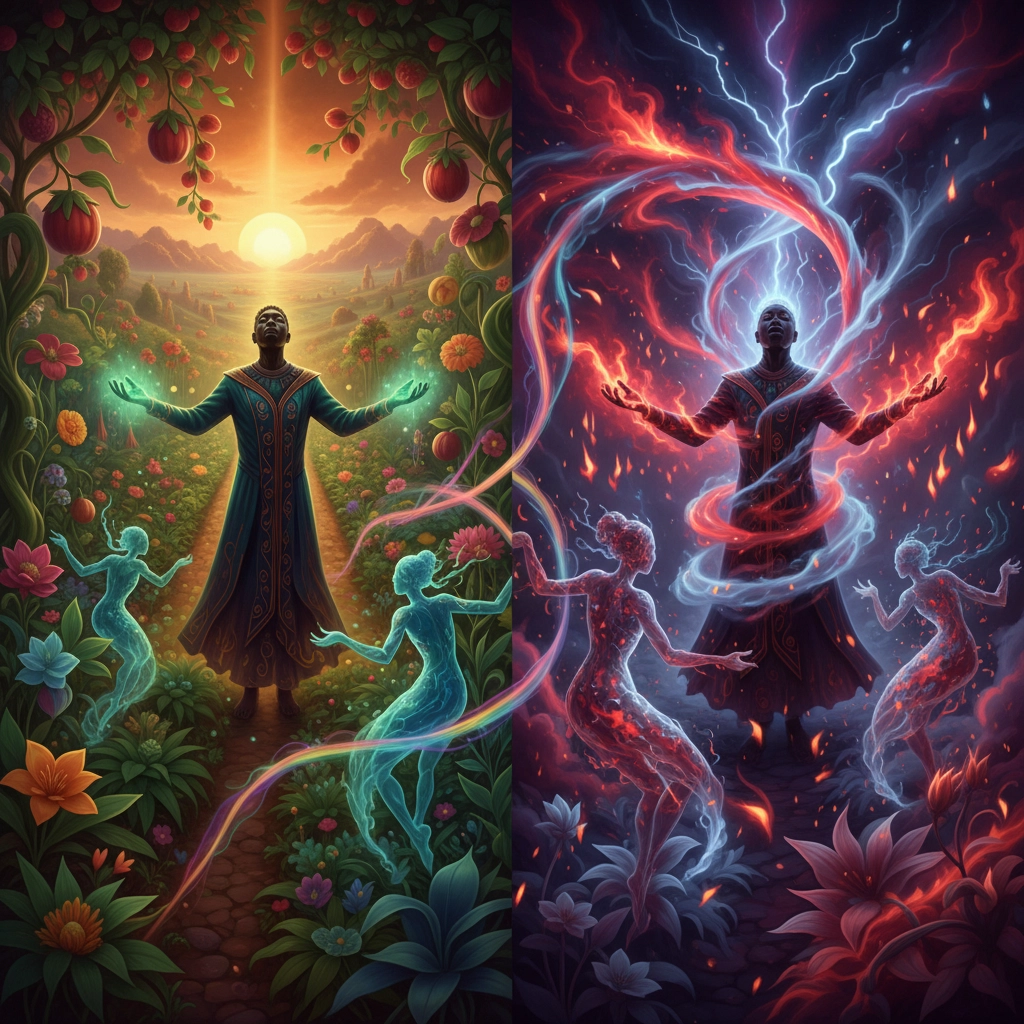
His connection to Gbadu (the earth goddess) and his sibling relationship with Sogbo (who controls the skies) create a complex web of spiritual interactions that affect how ceremonies are conducted, which offerings are appropriate, and what you can realistically expect from engaging with these forces.
Are you starting to see why authentic African spiritual practice requires study, mentorship, and genuine commitment? This isn't about collecting exotic spiritual techniques: it's about entering into relationships with forces that have governed human civilization for thousands of years.
Physical Manifestations and Sacred Colors
When Sakpata appears in traditional art and spiritual visions, he's often depicted as an elderly, weathered figure marked with sores and lesions: visual representations of his dominion over disease. This isn't meant to be frightening; it's meant to be honest about the realities of life, death, and the physical world.
His sacred colors are red and white: red representing the earth and the blood of life, white symbolizing both purity and the pallor of sickness. These aren't arbitrary choices; they're symbolic languages that communicate deep spiritual truths about the nature of existence.
Some traditions present Sakpata as androgynous, embodying both masculine and feminine energies. This makes sense when you consider that the earth itself is both receptive (traditionally feminine) and generative (traditionally masculine). The land receives seed and rain, but it also pushes forth life with tremendous force.
The Myth That Explains Everything
Ready for a story that'll help you understand how spiritual forces actually interact? Here's the key myth about Sakpata and his relationship with his sibling Sogbo:
When Sakpata descended to earth with tools and crops for humanity, he realized he lacked two essential elements: water and fire. Meanwhile, Sogbo controlled the rains from the sky. Through the trickery of Legba (the messenger god and their youngest sibling), Sogbo withheld rain, causing a devastating drought that made humans angry with Sakpata for his failed promises of prosperity.

The resolution came when humans, guided by the wututu bird and with Legba's help, lit a great fire whose smoke reached heaven. This prompted Mawu to order Sogbo to release the rains, establishing that while Sogbo controls the sky, humans can call for rain when needed: but only through proper protocols and understanding.
This myth isn't just a story; it's a spiritual manual that explains how different forces interact, why certain rituals work, and what happens when spiritual relationships break down. It also shows that human agency matters: we're not just passive recipients of spiritual favor, but active participants who can influence spiritual outcomes through proper action.
Modern Worship and Cultural Significance
Today, Sakpata's influence extends far beyond traditional Fon communities. His worship appears in Yoruba traditions, Trinidad Orisha practices, and various Vodun spiritual systems throughout the African diaspora. But here's what you need to understand: this isn't just historical or cultural curiosity. These are living traditions with active practitioners who maintain relationships with these spiritual forces.
The worship of Sakpata involves specific offerings (red and white beaded garments, particular foods, and animal sacrifices when appropriate), dedicated songs and prayers, and elaborate ceremonies designed to maintain proper relationships with earth-based spiritual forces. Shrines to Sakpata serve as focal points for community worship and individual spiritual work.
But before you start thinking about how you might "work with" Sakpata, ask yourself: Are you prepared for what that actually means? Are you ready to engage with a spiritual force that demands accountability, respects natural cycles, and won't protect you from the consequences of your own actions?
What Sakpata Teaches About Real Spiritual Power
Sakpata's teachings cut through a lot of New Age nonsense about spirituality being all light and love. Real spiritual power involves engaging with forces that can both nurture and destroy, that demand respect and proper protocol, and that connect you to the actual earth rather than abstract spiritual concepts.
If you're feeling called to deeper African spiritual practice, Sakpata represents the kind of authentic engagement that transforms lives: not through wishful thinking or positive affirmations, but through direct relationship with the forces that actually govern existence.
This means approaching African spirituality with humility, seeking proper mentorship, learning traditional protocols, and understanding that spiritual development isn't about getting what you want: it's about aligning yourself with forces much larger and more ancient than your individual desires.

Ready to move beyond spiritual tourism and into genuine practice? Start by studying the traditions that have maintained these relationships for centuries. Find authentic teachers. Learn the languages, understand the histories, and prepare yourself for spiritual work that will challenge everything you think you know about power, protection, and personal transformation.
Sakpata doesn't need your worship, but engaging with his teachings might just give you the spiritual foundation you've been looking for: one rooted in earth, honesty, and the kind of power that actually changes lives.
