
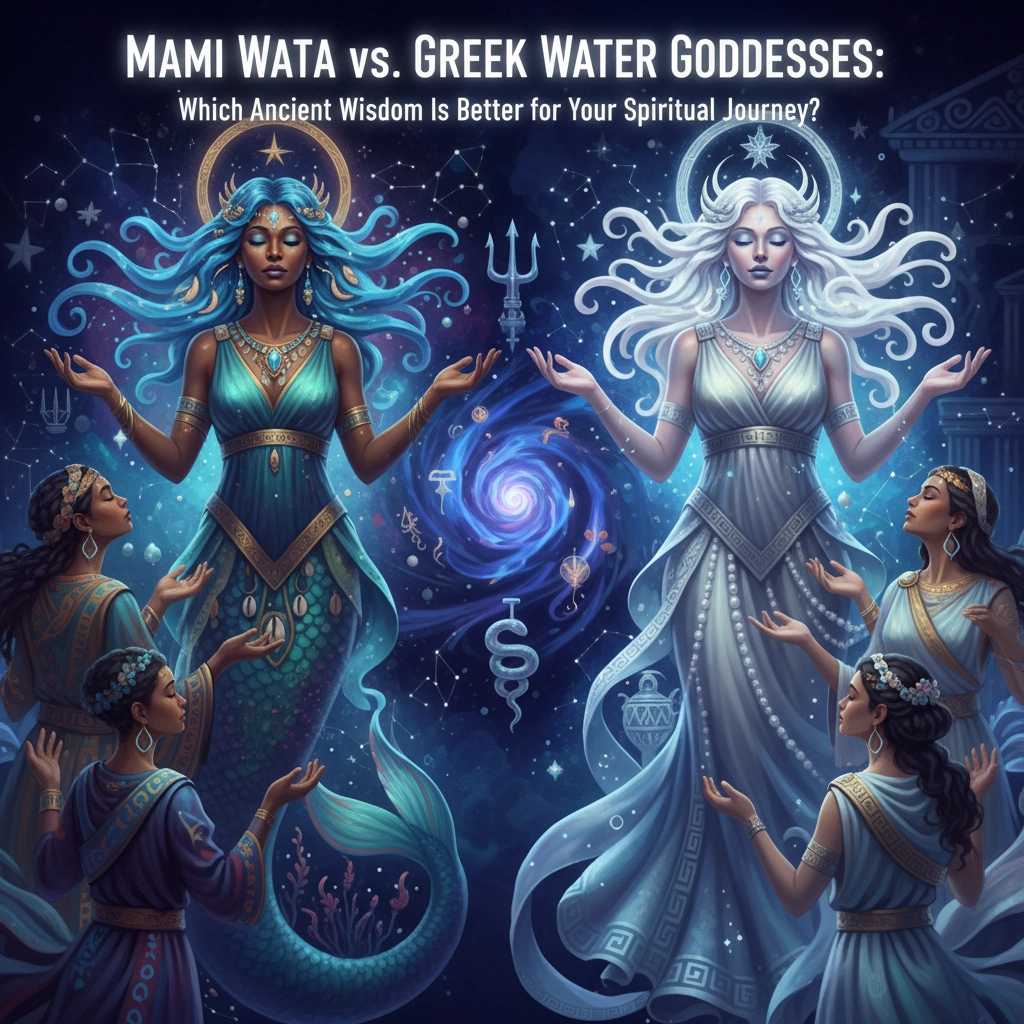
Let's get real for a second, you've probably stumbled across countless spiritual traditions promising transformation, healing, and connection to divine feminine energy. But when it comes to water spirits and goddesses, two major traditions keep coming up: the powerful African water spirit Mami Wata and the classical Greek water goddesses like Aphrodite, Thetis, and Amphitrite.
Here's the thing though, asking which one is "better" is like asking whether the ocean is better than the river. They're both water, both life-giving, but they flow differently. So instead of declaring a winner, let's dive deep into what each tradition offers your spiritual journey.
Who Is Mami Wata Really?
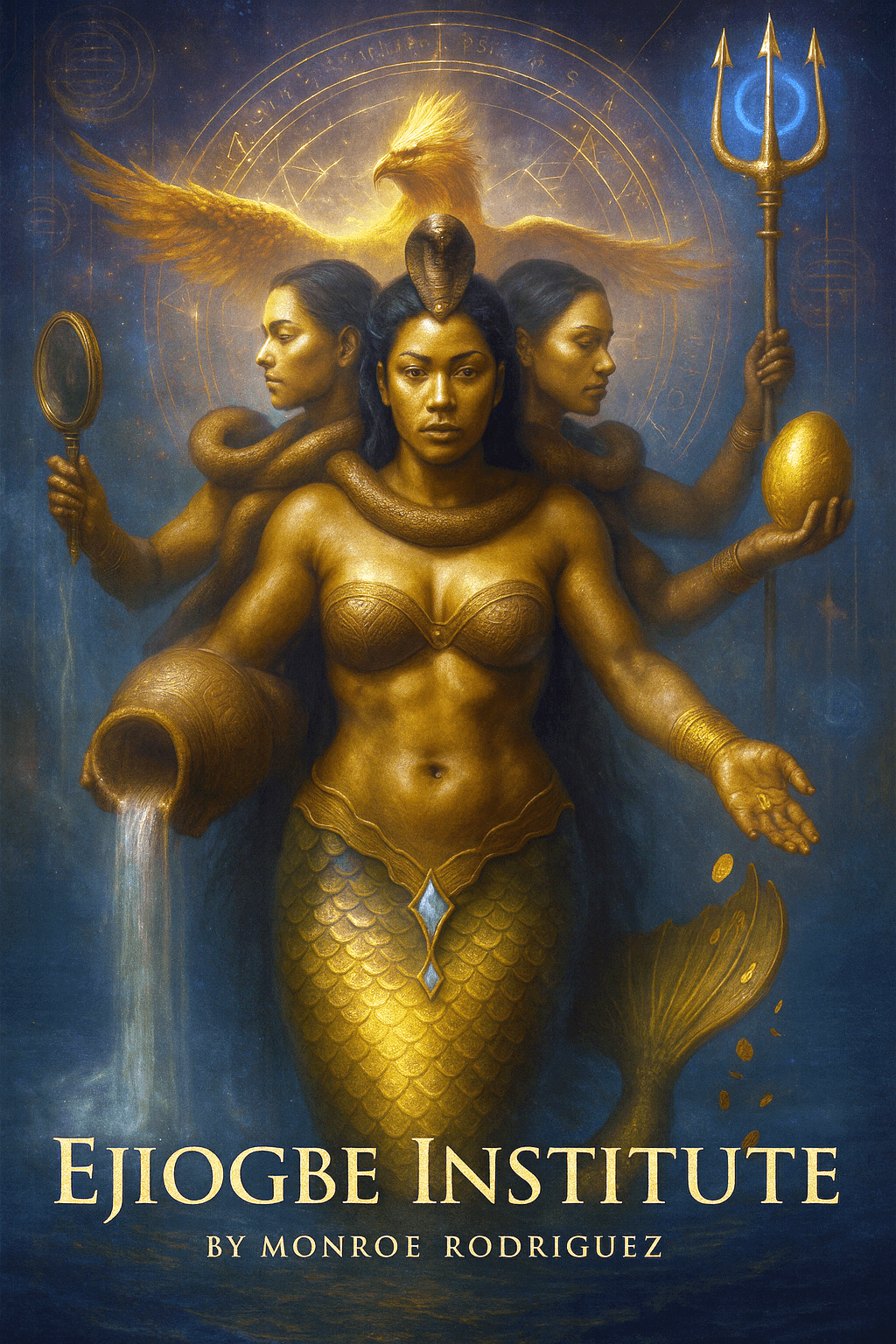
If you've been scrolling through spiritual TikTok or wandering into metaphysical shops, you've probably seen her image, a beautiful woman with a serpent wrapped around her body, sometimes depicted as a mermaid. But Mami Wata isn't just an aesthetic for your altar (though she does look incredible there).
Mami Wata is a fertility goddess deeply rooted in West, Central, Eastern, and Southern African traditions. She's associated with prosperity, healing, transformation, and yes, seduction and sexuality too. But here's what makes her different from your typical "love goddess", she embodies the complete duality of water itself.

Think about it: water can nurture crops and sustain life, but it can also flood entire communities. Mami Wata carries this same energy, she's incredibly generous to those who honor her properly, but she doesn't tolerate disrespect or half-hearted devotion. She's not here for your spiritual window shopping.
What makes Mami Wata's tradition so powerful is its resilience. This isn't some ancient practice that died out, it survived the horrors of the slave trade and continues thriving across the Caribbean, Americas, and throughout the African diaspora. When enslaved Africans were forcibly separated from their homeland, they carried Mami Wata's essence in their hearts and recreated her worship in new lands.
Her rituals are communal, involving music, dance, and water ceremonies. There's something beautifully democratic about this, you don't need years of theological study to connect with Mami Wata. You need respect, intention, and willingness to show up authentically.
The Greek Water Goddesses: Classical Divine Feminine
Now let's talk about the Greek side of things. When people mention Greek water goddesses, they're usually thinking of Aphrodite (goddess of love and beauty born from sea foam), Amphitrite (queen of the seas and wife of Poseidon), or Thetis (prophetic sea nymph and mother of Achilles). There are also the Nereids and Oceanids, basically a whole family tree of water spirits.

Greek water goddesses operate differently than Mami Wata. They're part of a structured pantheon with clear hierarchies, family relationships, and specific domains. Aphrodite handles love and beauty, Thetis deals with prophecy and protection, Amphitrite manages the civilized aspects of sea power.
Here's what's fascinating about the Greek approach: it's incredibly psychological. These goddesses represent archetypal energies that Carl Jung would have loved. When you work with Aphrodite, you're not just asking for a date on Friday night (though she might help with that too). You're engaging with the universal force of attraction, beauty, and creative passion.
The Greek tradition emphasizes individual relationships with specific deities. You might feel called to Thetis if you're dealing with motherhood issues or need prophetic guidance. Amphitrite might appeal if you're working on leadership and authority. It's more specialized, more intellectual in some ways.
The Real Differences That Matter for Your Practice
Ready for some truth? The biggest difference isn't in their power: it's in their cultural context and how they expect to be approached.
Mami Wata comes from living traditions. There are communities right now, today, actively practicing her worship. When you connect with Mami Wata, you're joining something that never died, never went underground, never needed to be "reconstructed" from ancient texts.
Greek water goddesses require more reconstruction work. Unless you're Greek Orthodox or part of modern Hellenic polytheism communities, you're essentially piecing together ancient practices from historical sources, archaeological evidence, and personal gnosis.

Here's another key difference: community versus individual focus. Mami Wata's tradition is inherently communal. Even if you're practicing solo, you're connecting to a collective energy, a shared cultural memory. Greek water goddess worship can be more solitary and contemplative: you and the goddess working out your personal spiritual business.
And let's talk about gender dynamics because this matters. Mami Wata traditions have strong feminine leadership: priestesses, female mediums, women holding significant spiritual authority. Many Greek traditions, especially as filtered through modern paganism, can sometimes feel more male-gaze influenced (looking at you, some interpretations of Aphrodite).
What Are You Actually Looking For?
Before you choose sides in this spiritual showdown, ask yourself: What do you actually need right now?
Are you dealing with trauma from systemic oppression? Mami Wata's tradition carries the wisdom of survival, resistance, and adaptation. She knows what it's like to be displaced, dismissed, and still maintain power.
Are you more drawn to intellectual spiritual practice? Greek goddesses might be your speed. There's rich mythology to study, complex relationships between deities to understand, archetypal psychology to explore.
Do you need healing around sexuality and sensuality? Both traditions can help, but they approach it differently. Mami Wata integrates sexuality as natural spiritual power. Greek goddesses might separate it more: Aphrodite for passion, Artemis for independence, etc.
Are you looking for community or solitary practice? This is huge. Mami Wata's energy thrives in community settings with music, dance, and shared ritual. Greek goddesses can absolutely be honored in groups, but they're also comfortable with quiet, individual worship.
Practical Ways to Connect (Without Cultural Appropriation)
Here's where we need to get serious for a minute. Both of these traditions have been colonized, commercialized, and sometimes straight-up stolen by people who want the aesthetic without the respect.
If you're called to Mami Wata:
- Learn about the history of African water spirits and how they survived diaspora
- Support Black spiritual practitioners and teachers
- Understand that this isn't just about pretty mermaid energy: it's about resilience, healing, and justice
- Approach with offerings of perfume, jewelry, flowers, and sincere gratitude
- Consider supporting organizations that preserve African spiritual traditions
If you're drawn to Greek water goddesses:
- Study the actual mythology, not just Pinterest interpretations
- Understand the historical context of ancient Greek religion
- Work with reconstructionist communities who've done the research
- Offer appropriate devotions like wine, honey, flowers, and libations
- Remember these are complex deities, not just spiritual vending machines

Can You Work with Both?
This is where people get controversial, but honestly? Water recognizes water. Many practitioners find that Mami Wata and Greek water goddesses can coexist in spiritual practice, especially if you approach both with genuine respect and understanding.
The key is avoiding spiritual colonization: don't just grab what feels good without honoring the source. If you're called to both traditions, spend time learning about each separately first. Build relationships. Understand the differences.
Some practitioners create separate altar spaces, different ritual times, or work with them for different purposes. Others find natural connections: both traditions value beauty, transformation, healing, and the power of feminine water energy.
The Bottom Line: It's Not About Better
Here's what nobody wants to tell you: choosing between Mami Wata and Greek water goddesses isn't about which one is objectively "better" for spiritual journeys. It's about which one resonates with your soul, your needs, your cultural background, and your spiritual goals right now.
Mami Wata offers living tradition, communal healing, resilience wisdom, and direct spiritual power. Greek water goddesses provide archetypal understanding, psychological depth, structured mythology, and classical spiritual frameworks.
Maybe you're drawn to Mami Wata because you need her fierce protection and prosperity magic. Maybe Thetis calls to you because you're navigating motherhood or need prophetic insight. Maybe Aphrodite's calling because you're ready to embrace your full sensual power.

The real question isn't "which is better?": it's "which one is calling to you right now?" Trust that inner knowing. Water spirits have been guiding humans for thousands of years across multiple continents. They're not going anywhere, and neither is their wisdom.
Your spiritual journey is yours to navigate. Whether you're drawn to the rhythmic drums of Mami Wata ceremonies or the quiet contemplation of Greek goddess devotion, both paths can lead to transformation, healing, and deep spiritual connection.
Just remember: whatever tradition calls to you, show up with respect, consistency, and genuine intention. These aren't casual spiritual experiments. They're relationships with powerful divine feminine forces who've been helping humans navigate life's waters since ancient times.
Ready to dive deeper? The water's perfect, and the goddesses are waiting.
