
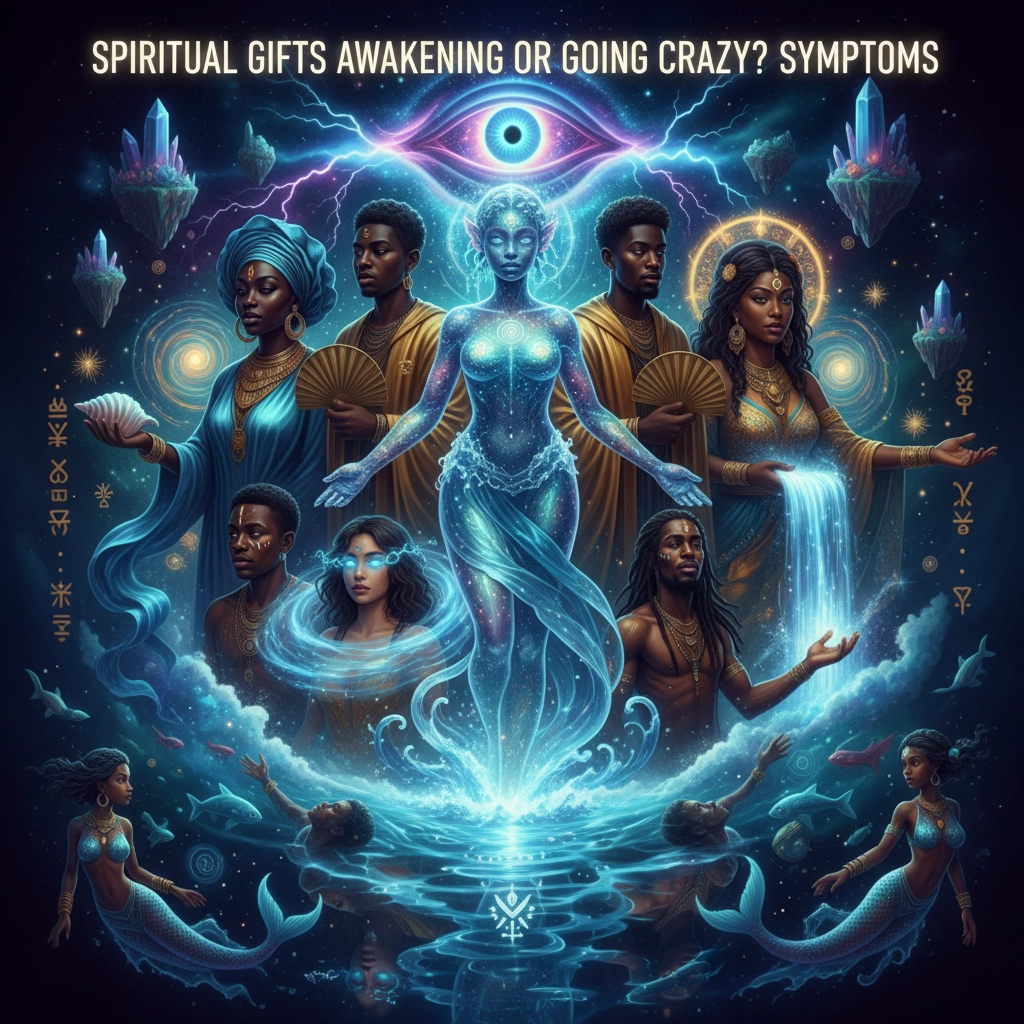
Are you experiencing strange dreams, sudden sensitivity to energies, or feeling like you can sense things others can't? Maybe you're hearing voices, having vivid visions, or feeling called to practices your family doesn't understand. Before you start questioning your sanity, take a breath. What you're experiencing might be the stirring of ancestral spiritual gifts: and in African and Afro-diasporic traditions, there are time-tested ways to tell the difference between a spiritual calling and something that requires medical attention.
Let's be real: when your grandmother's spirit starts visiting you in dreams, when you suddenly know things you shouldn't know, or when you feel compelled to pour water for ancestors you've never met, it can feel overwhelming. But here's what our elders have always known: spiritual gifts don't make you crazy. They make you connected.
Traditional Signs of Spiritual Awakening in African Systems
In Yoruba tradition, the awakening of spiritual gifts often begins with what elders call "the calling of the head" (ori). This isn't some mystical mumbo-jumbo: it's a documented process that Babalawo and Iyalorisas have observed for centuries. You might start having recurring dreams about water, specific Orisas, or deceased family members giving you messages. These dreams are usually vivid, memorable, and feel different from regular dreams.

Physical symptoms in traditional contexts include sudden sensitivity to certain foods (especially those prohibited by specific Orisas), unexplained illnesses that doctors can't diagnose, or feeling energetically drained in certain places or around certain people. In Vodun traditions, initiates often report feeling called to specific locations: crossroads, bodies of water, or ancestral burial grounds: without understanding why.
Haitian Vodou practitioners recognize similar patterns. You might feel drawn to specific lwas (spirits) through dreams, develop sudden knowledge of songs or dances you've never learned, or experience what elders call "mounting": brief moments where you feel another presence trying to communicate through you. This isn't possession in the Hollywood sense: it's gentle spiritual communication that traditional practitioners know how to guide and control.
How Elders Distinguish Spiritual Calling from Psychological Imbalance
Here's where traditional wisdom gets practical. Elders in African spiritual systems use specific criteria to determine whether someone is experiencing a genuine spiritual calling or needs medical intervention. The key differences are clear once you know what to look for.
Genuine spiritual awakening typically comes with increased empathy, desire to help others, and stronger connection to family and community. People experiencing true spiritual calling often become more grounded, not less. They might start having prophetic dreams that come true, develop healing abilities, or show natural aptitude for divination systems like Ifa or cowrie shells.
In contrast, psychological imbalance usually involves disconnection from reality, inability to function in daily life, or thoughts of harming oneself or others. Traditional healers always recommend medical consultation when someone experiences paranoia, inability to distinguish between spiritual messages and intrusive thoughts, or loses touch with basic social functioning.
Vodun priests are particularly skilled at this distinction. They look for coherent spiritual communication: messages that make sense within traditional cosmology and help the person grow spiritually. Random, chaotic, or destructive "messages" are red flags that suggest medical intervention is needed alongside spiritual guidance.
Specific Symptoms in Different Traditions
In Yoruba/Orisa traditions, spiritual awakening often manifests through elemental sensitivities. You might suddenly need to be near water if Osun is calling you, feel energized by thunderstorms if Sango is reaching out, or find yourself inexplicably drawn to iron objects if Ogun wants your attention. These aren't random preferences: they're documented patterns that experienced priests recognize immediately.
Vodun practitioners report different but equally specific signs. You might start speaking in languages you don't know during meditation, feel compelled to create specific altars without prior knowledge, or develop sudden expertise in herbal medicine. The spirits in Vodun are known for their directness: they don't usually leave people guessing about their intentions.
In Haitian Vodou, spiritual calling often involves what elders call "spiritual heat": a warm sensation that moves through the body during spiritual practices. You might feel drawn to specific colors associated with particular lwas, develop cravings for foods traditionally offered to spirits, or find yourself humming songs you've never heard.

Congo/Palo traditions recognize spiritual awakening through connection to natural elements and ancestral spirits. People often report feeling called to work with bones, shells, or earth in ways they can't explain. They might develop sudden knowledge of which plants heal specific ailments or feel spiritually energized in cemeteries or natural settings.
Traditional Warning Signs vs. Spiritual Gifts
Our ancestors weren't naive about mental health. They understood the difference between spiritual gifts and spiritual emergency. Traditional warning signs that require immediate attention include:
Hearing voices that encourage harmful behavior, experiencing "spiritual messages" that contradict core family values or traditional ethics, or feeling compelled to abandon all responsibilities without spiritual guidance. These are not signs of spiritual awakening: they're signs that something else is happening.
Genuine spiritual gifts, according to documented traditional sources, always serve the community's wellbeing. They bring healing, protection, wisdom, and connection. They might challenge you to grow, but they don't ask you to harm yourself or others.
In Cuban Santería, experienced santeros teach that real spiritual communication feels like loving guidance from wise elders, not threatening commands from unknown entities. The spirits want to help you thrive, not destruct your life.
When Dreams Become Calling
Dreams are the primary way ancestors and spirits communicate in African traditions, but not all spiritual dreams indicate a calling to priesthood. Elders teach specific criteria for recognizing genuine spiritual communication through dreams.
Authentic spiritual dreams usually repeat similar themes or messages over time. You might dream of the same ancestor multiple times, receive consistent guidance about specific life decisions, or have dreams that later prove prophetic. These dreams often feel more real than regular dreams and leave lasting emotional impressions.

In contrast, random scary dreams, nightmares without coherent messages, or dreams that leave you feeling drained rather than guided are not typically signs of spiritual calling. Traditional practitioners always investigate the difference before recommending spiritual initiation.
Practical Guidance from Traditional Sources
If you're experiencing what you believe are spiritual gifts awakening, traditional wisdom offers clear next steps. First, document everything. Keep a journal of dreams, unusual experiences, and physical symptoms. Patterns will emerge that help experienced practitioners understand what's happening.
Second, seek guidance from established practitioners in your tradition of interest. Don't rely on internet research or self-initiation. African spiritual systems require proper training and community support: they're not solo journeys.
Third, maintain your regular responsibilities while exploring spirituality. Authentic spiritual calling enhances your ability to function in the world, not escape from it. If spiritual experiences are making it harder to work, maintain relationships, or care for yourself, seek medical consultation alongside spiritual guidance.
Most importantly, remember that spiritual gifts are meant to serve community healing and wisdom-keeping. If your experiences aren't ultimately leading you toward helping others and connecting with ancestral wisdom, they might not be the spiritual calling you think they are.
Finding Balance and Support
The awakening of spiritual gifts doesn't happen in isolation: it happens within community, tradition, and proper guidance. Our ancestors developed elaborate support systems precisely because they understood this process can feel overwhelming without proper context.
Whether you're experiencing the stirring of Orisa consciousness, feeling called by Vodun spirits, or sensing ancestral presence in your dreams, remember that millions of people have walked this path before you. Their wisdom, preserved in traditional practices and elder knowledge, offers reliable guidance for distinguishing genuine spiritual awakening from other experiences.
Trust the process, but also trust the wisdom of seeking proper guidance. Your ancestors want you to thrive, not struggle alone with gifts you don't understand. The path to authentic spiritual development has always been community-based, tradition-grounded, and elder-guided. That hasn't changed, and it won't change( because it works.)
