
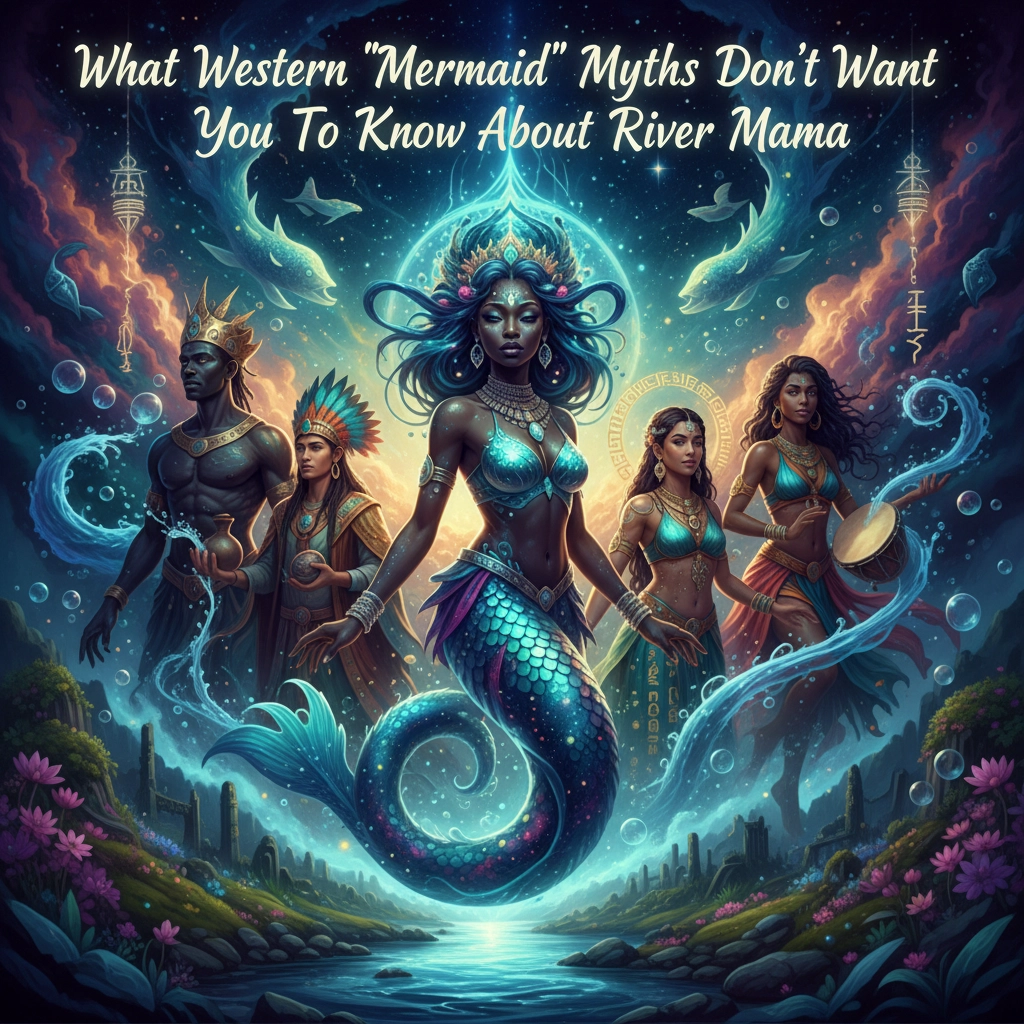
Ever wonder why Disney's Little Mermaid looks nothing like the water spirits your grandmother whispered about? There's a reason for that, and it's not just about animation budgets. Western mermaid mythology has been white-washing, sanitizing, and straight-up stealing from powerful African and indigenous water traditions for centuries, and River Mama is the perfect example of what they don't want you to know.
You've been fed a steady diet of romantic fish-tailed beauties who dream of human legs and Prince Charming. But the real water spirits? They're nothing like that fairy-tale nonsense. River Mama, known as River Mumma in Jamaica, represents something far more profound: spiritual resistance, environmental guardianship, and the living connection between our ancestors and the natural world.
Ready to dive deeper than Disney ever dared? Let's talk about what they've been hiding.
The Sacred Guardian They Erased
Here's what Western mythology won't tell you: River Mama isn't lounging around waiting for some man to rescue her from underwater boredom. She's a primordial guardian spirit who protects Jamaica's rivers like her life depends on it, because it does, and so does yours.

River Mama inhabits freshwater rivers, not the vast oceans of European folklore. She guards all fish as her children and has the power to dry up entire waterways if disrespected. Think about that for a moment, when's the last time you saw Ariel wielding that kind of environmental authority? Never, because Western narratives deliberately strip water spirits of their ecological power.
This isn't about seducing sailors or trading voices for legs. River Mama's protection is fierce and uncompromising. Look at her wrong, and she might drag you under the water by your heels. Try to capture her, and watch the river itself turn against you. She doesn't play games with boundary-crossers, and she certainly doesn't need saving.
Are you starting to see the difference? Western mermaids exist for human entertainment and desire. River Mama exists to maintain cosmic balance.
The Multicultural Truth They Don't Want You Knowing
Here's where it gets really interesting, and where Western narratives completely fall apart. River Mama isn't some European export. She's a beautiful synthesis of Taino, African, and yes, some European influences, but the foundation is deeply rooted in indigenous and African spiritual technology.
The Taino people had Atabeyra, their main female deity who governed fresh water and human fertility. West and Central African traditions brought Yemoja (Yemaya), the Yoruba orisha of maternal love who protects all fish. Some scholars connect her to Ashanti beliefs about water's divine, purifying, and creative force.
You see what happened here? Enslaved Africans and indigenous peoples didn't just lose their spiritual traditions: they transformed them. They adapted their water deities to Caribbean landscapes, creating River Mama as a form of spiritual resistance that could survive colonization.

Meanwhile, Western mermaid mythology traces back to Greek sirens and Assyrian goddesses, completely disconnected from this rich cultural layering. When Hans Christian Andersen wrote "The Little Mermaid" in 1837, he wasn't drawing from Caribbean spiritual wisdom: he was creating European fantasy that would eventually overwrite these more complex traditions.
Stop letting them convince you that mermaids are universal. They're not. River Mama represents something entirely different: cultural survival, spiritual technology, and the genius of oppressed peoples who found ways to keep their cosmologies alive.
Environmental Stewardship vs. Romantic Fantasy
Western mermaid tales love their marriage plots. Man steals something from mermaid, forces her to stay until she gets it back, they fall in love, the end. It's basically spiritual kidnapping with a happy ending, but somehow we're supposed to find it romantic.
River Mama operates on completely different principles. She represents environmental stewardship and the consequences of disrespecting nature. People historically brought food offerings to riverbanks, sang, danced myal, and established relationships of reverence: not possession.
When River Mama gets angry, she can cause drowning, drought, storms, and prevent fish from being caught. These aren't random acts of violence: they're ecological corrections. She only allows people with good intentions to cross her rivers. Those with bad intentions? They either turn back or drown.

Think about what this means for your own spiritual practice. Are you approaching water spirits with reverence or with the entitled energy Western mythology taught you? Are you trying to possess and control spiritual forces, or are you learning to work in reciprocal relationship?
River Mama demands that you check your intentions before you even approach. That's not cruelty: that's spiritual accountability.
The Golden Table: Resistance to Colonial Plunder
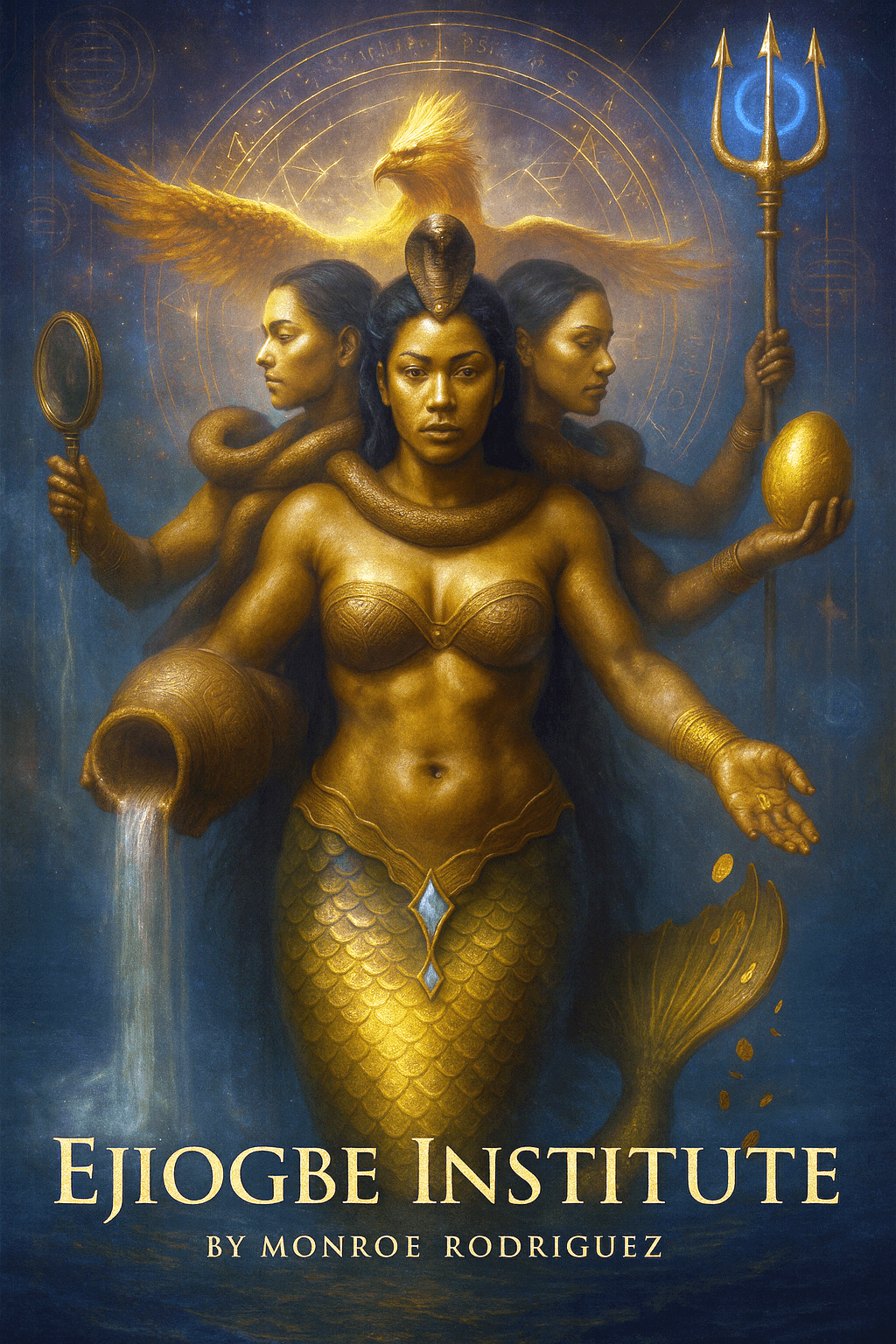
Here's a detail that'll never make it into a Disney movie: River Mama guards the Golden Table, solid gold left behind by Spanish conquistadors during their colonial rampage. On the hottest days at noon, this table rises to the surface, tempting the greedy: but anyone who tries to steal it meets their end.
This isn't just folklore: it's encoded history. River Mama's guardianship of colonial gold represents indigenous and African resistance to European plunder. She transforms stolen wealth into a test of character that most people fail.
Western mermaid mythology has no equivalent to this anti-colonial narrative. Instead of critiquing systems of exploitation, Western mermaids often become objects within those same systems: captured, domesticated, or transformed to suit human desires.
Are you seeing the pattern? River Mama stories encode resistance. Western mermaid stories encode conquest and possession. One tradition teaches you to resist oppression; the other teaches you to romanticize it.
Sacred Beauty and the Power of Mystery
When River Mama rises from the water to sit on rocks and comb her long black hair with a golden comb, the encounter carries sacred weight. On moonlit nights, those who glimpse her are warned not to stare: her terrible beauty can hypnotize and lure people to their deaths.
But here's the nuance Western mythology misses: if you find her comb after she's been frightened away, you're not punished. Instead, she appears in your dreams, directing you to underwater treasure. This is reciprocal relationship, not punishment for punishment's sake.

Contemporary perspectives emphasize that River Mama "does not want to show herself: the beauty is in the mystery. The beauty is in the darkness." This valorization of mystery and darkness stands in complete opposition to Western traditions that increasingly domesticated mermaids into children's entertainment.
You don't need to fully understand every spiritual force to respect it. You don't need to see everything to believe. Sometimes the most powerful spiritual encounters happen in the liminal spaces, in the mystery, in the darkness that Western mythology tries so hard to illuminate and control.
Living Tradition vs. Commercial Mythology
River Mama remains a living spiritual presence in Jamaican culture, remembered in literature, oral tradition, and religious practices like Revival Zion. She inhabits specific rivers, beneath cotton trees, in tranquil places where water runs "achingly blue."
People still tell stories about disappearances at places like the Rio Cobre's Flat Bridge. They still bring offerings. They still teach children to respect her boundaries. This isn't ancient history: it's living spiritual technology.
Meanwhile, Western mermaid mythology has been commercialized beyond recognition. The manatee theory suggests drunk sailors mistook these marine mammals for beautiful women, trivializing the spiritual significance mermaids held across cultures. Even the scientific classification "Sirenia" perpetuates this dismissive narrative.

Here's what you need to understand: figures like River Mama represent spiritual technologies of survival. They're ways that colonized and enslaved peoples maintained their cosmologies, encoded resistance to exploitation, and preserved environmental ethics through oral tradition.
When Western mythology flattens these complex narratives into romance or danger stories, it's not innocent entertainment: it's cultural erasure. It's the same colonizing energy that tried to destroy these traditions in the first place.
Reclaiming Water Spirit Wisdom
So what does this mean for your spiritual practice? First, stop approaching water spirits like they're here for your entertainment or wish fulfillment. River Mama doesn't exist to grant your desires: she exists to maintain cosmic balance and protect the waterways that sustain all life.
Second, educate yourself about the real cultural contexts of these traditions. Don't just pull images and symbols without understanding their histories of resistance, survival, and sacred relationship with the natural world.
Third, check your relationship with water itself. Are you taking it for granted? Are you participating in systems that pollute or privatize water resources? River Mama's environmental stewardship isn't just spiritual metaphor: it's practical wisdom about living in right relationship with the elements that sustain us.
Finally, understand that not every spiritual tradition is meant for you to practice, but every spiritual tradition deserves your respect. River Mama's story teaches us about cultural resilience, environmental protection, and the power of mystery: lessons we all need, regardless of our personal spiritual paths.
The Western world tried to replace powerful water guardians with romantic fantasies, but the real spirits never went anywhere. They're still in the rivers, still protecting their children, still teaching anyone humble enough to listen.
Are you ready to stop settling for sanitized fairy tales and start recognizing the profound spiritual technologies that have been hiding in plain sight all along?
