

Ever heard whispers about a powerful river spirit with three heads and six arms who stands as Mami Wata's divine consort? Meet Densu – one of West Africa's most fascinating yet underappreciated water deities. If you're diving deep into African spiritual traditions, especially those rooted in Ghana and the broader Akan cosmology, then understanding Densu isn't just recommended – it's essential.
But here's the thing: Densu isn't your typical river spirit. This isn't just another water deity floating around in folklore. We're talking about a complex spiritual force whose iconography tells a story of cultural fusion, artistic innovation, and deep reverence for life-giving waters. Are you ready to explore what makes this three-headed guardian so uniquely powerful?
The Divine Masculine of the Waters
Let's get one thing straight from the jump: Densu is unmistakably masculine energy. While Mami Wata often takes center stage in discussions of African water spirits, Densu represents the complementary male force – the protective consort who brings balance to aquatic spiritual realms. Think of him as the knight to Mami Wata's queen, but with his own distinct domain and powers.
In Akan tradition, Densu isn't just "another water spirit." He's THE river protector, the guardian of abundance, and the spiritual force responsible for ensuring that water brings life rather than destruction. When communities along Ghana's rivers pray for protection during flooding season or seek blessings for fishing expeditions, they're often calling upon Densu's masculine energy to safeguard their endeavors.
The Three-Headed Mystery: Hindu Influences in African Art
Now here's where things get really interesting – and where art history meets spiritual evolution. You've probably seen representations of Densu that look surprisingly similar to Hindu deities, particularly Dattatreya. That's not coincidence; it's cultural genius.
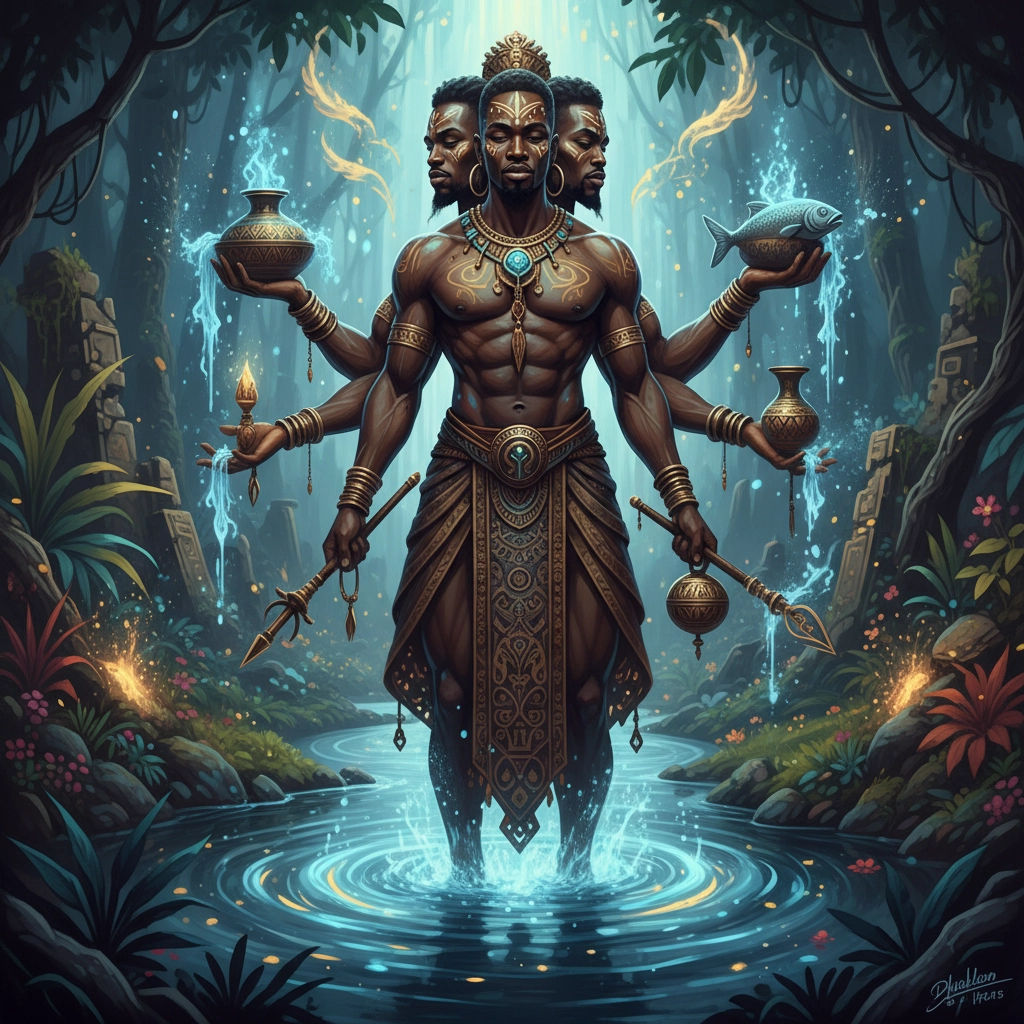
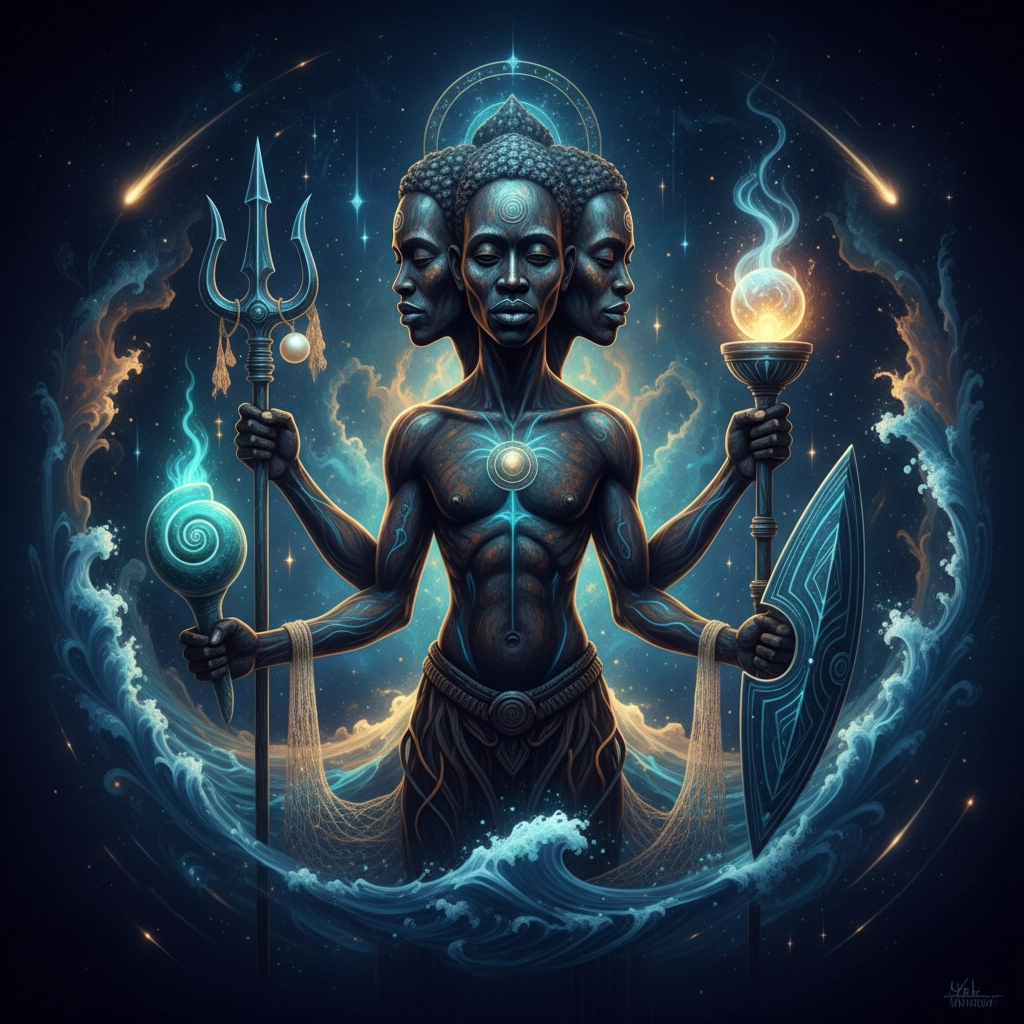
During the mid-20th century, artists along the Guinea Coast and parts of Nigeria began incorporating Hindu iconographic elements into their representations of traditional African spirits. The three-headed, six-armed imagery wasn't borrowed haphazardly – it was a deliberate artistic choice that perfectly captured Densu's multifaceted nature. Each head represents a different aspect of his protective power: the guardian of the riverbank, the protector of aquatic life, and the bringer of abundance.
Those six arms? They're not just for show. Traditional depictions show Densu holding various ritual and aquatic objects – water pots symbolizing abundance, fish representing fertility and sustenance, and ceremonial tools that mark his role in spiritual practices. It's like having a spiritual Swiss Army knife in divine form.
Consort to Mami Wata: The Divine Partnership
You can't talk about Densu without understanding his relationship with Mami Wata. This isn't just some spiritual romance novel situation – their partnership represents the balanced male and female principles that govern water's dual nature. Where Mami Wata might be the flowing, nurturing aspect of water, Densu brings the protective, boundary-setting energy.
Think about it: rivers can be life-giving and destructive. They can provide sustenance and cause floods. They can offer spiritual cleansing and pose physical danger. Densu and Mami Wata together embody this complete spectrum of aquatic power. When devotees seek their combined intervention, they're calling upon both the creative and protective aspects of water itself.
River Protector and Life Guardian
In Akan communities, Densu's role goes way beyond mythological symbolism. He's actively invoked for very practical purposes. Fishermen seek his blessing before heading out on dangerous waters. Farmers pray for his intervention during both droughts and floods. Pregnant women appeal to him for safe passage through the waters of childbirth – because yes, the connection between water and birth runs deep in West African spiritual thought.
But Densu doesn't just protect individuals – he's considered a guardian of entire river ecosystems. In traditional belief systems, his presence maintains the spiritual balance that keeps rivers healthy and abundant. Pollute a river under Densu's protection? You're not just dealing with environmental consequences – you're risking spiritual ones too.
Sacred Spaces: Shrines and Worship Sites
Walk along certain rivers in Ghana, and you'll find shrines dedicated to Densu that have been maintained for generations. These aren't elaborate temple complexes – they're often simple yet powerful spaces where the spiritual and natural worlds intersect. River stones arranged in specific patterns, offerings of water and fish, sacred vessels that catch river water for ceremonial use.
What makes these shrines special isn't their grandeur – it's their integration with the natural environment. Densu's worship spaces are designed to honor both the deity and the river itself. You're not just praying TO Densu; you're praying WITH the river, acknowledging the divine presence within the natural world.
These sites serve multiple community functions. They're places of individual prayer, but also gathering spots for collective rituals during times of crisis or celebration. When rivers flood or dry up, when fishing yields decline or thrive, communities turn to these sacred spaces to maintain their relationship with Densu.
Festivals and Celebrations
Densu's festival calendar follows the rhythms of river life. Major celebrations often coincide with seasonal changes – the beginning of fishing seasons, the end of flood periods, or times when river crossings become safer. These aren't just parties; they're community-wide acknowledgments of humanity's dependence on river systems and the spiritual forces that govern them.
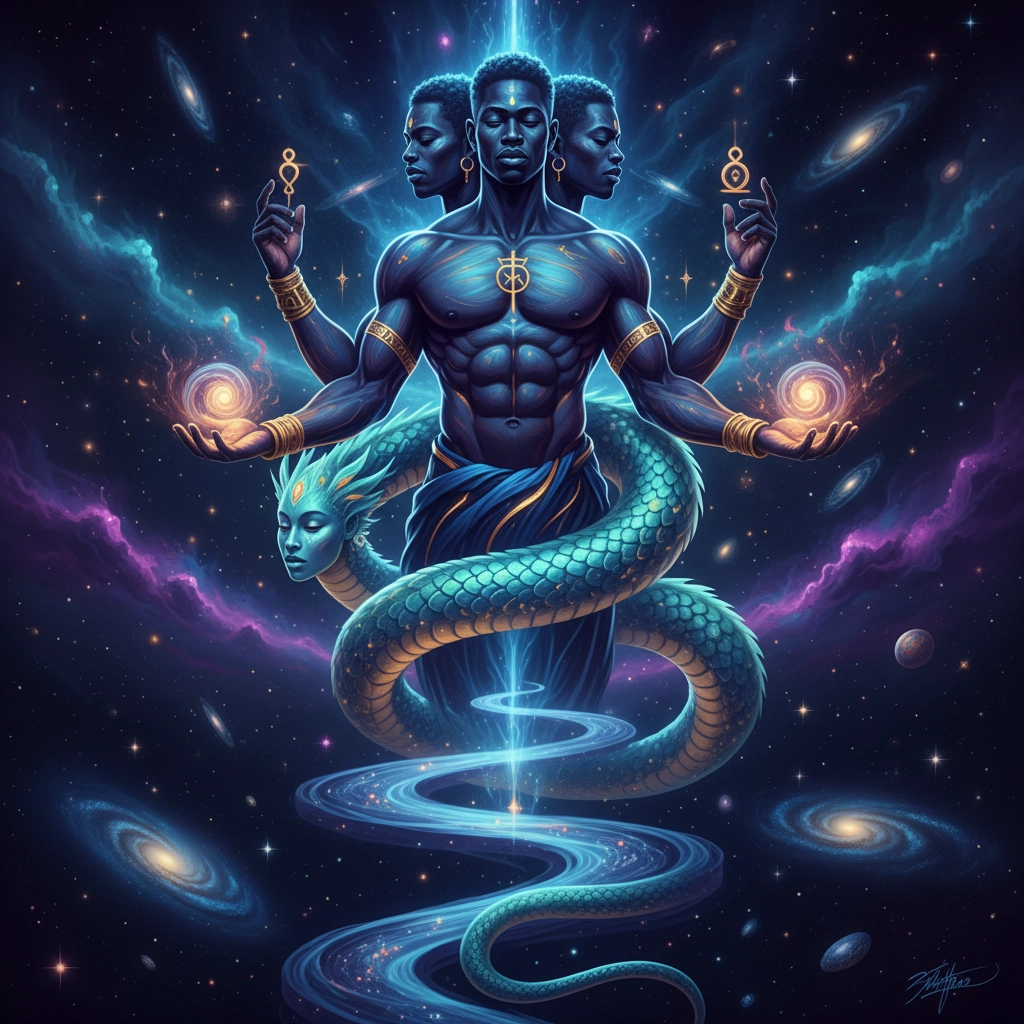
During these festivals, you'll see artistic representations of Densu's three-headed form prominently displayed. Ritual objects associated with his six arms – water vessels, fish symbols, protective amulets – become central elements in ceremonial processions. The community comes together not just to honor Densu, but to renew their collective commitment to protecting the waterways he guards.
Modern Relevance in a Changing World
Here's something worth considering: in an era of climate change and environmental degradation, Densu's role as river protector takes on urgent contemporary relevance. Traditional devotees aren't just practicing ancient customs – they're maintaining relationships with spiritual forces that embody environmental protection principles.
Communities that honor Densu often have stronger traditions of river conservation. They understand that spiritual and environmental health are interconnected. When developers want to build damaging projects along sacred rivers, or when industrial pollution threatens water sources, invoking Densu isn't just spiritual practice – it's environmental activism with centuries of tradition behind it.

Working with Densu Today
If you're drawn to working with Densu, approach with respect and understanding. This isn't a spirit you can just Google your way into a relationship with. His traditions are rooted in specific cultural contexts and maintained by living communities.
Start by learning about the rivers in your area – not just their names, but their ecosystems, their challenges, their role in local communities. Densu's energy is about protection and abundance, but it's also about responsibility. You can't ask for his blessings while ignoring environmental destruction or community needs.
Consider supporting river conservation efforts in Ghana and other West African countries where Densu's traditions remain strong. Spiritual connection without cultural respect and practical support isn't real devotion – it's spiritual tourism.
The Continuing Legacy
Densu represents something powerful in African spirituality – the integration of protective masculine energy with environmental stewardship. His three heads see past, present, and future. His six arms work simultaneously on multiple levels of existence. His role as Mami Wata's consort demonstrates the power of balanced partnership.
In a world where rivers face unprecedented threats and traditional knowledge systems struggle for recognition, Densu's presence reminds us that some protections run deeper than legal frameworks or technological solutions. Sometimes the most profound safeguards are spiritual ones, maintained by communities who understand that honoring the divine in nature isn't primitive thinking – it's sophisticated wisdom.
Understanding Densu means understanding that African spiritual traditions contain complex theological and ecological insights worthy of respect, study, and protection. His three-headed gaze sees what single perspectives miss. His six-armed embrace protects what individual efforts cannot safeguard alone.
