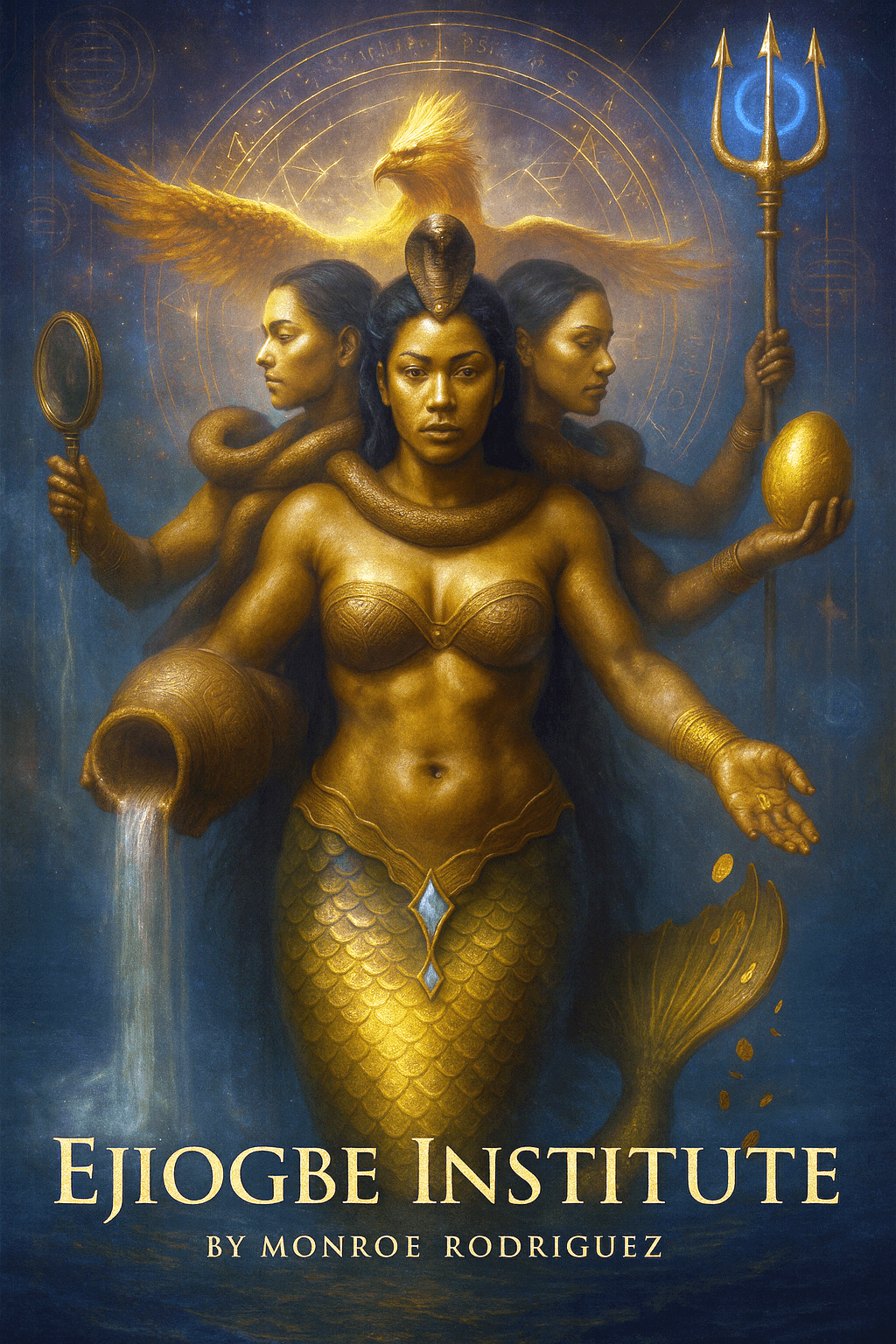


Ever wondered about the water spirits that don't quite fit the typical mold? Let me introduce you to one of the most fascinating and complex deities in West African Vodun tradition: Tohossou. This isn't your everyday water spirit, we're talking about a deity that challenges everything you think you know about the boundaries between the divine and human realms.
The King of Waters
Tohossou (pronounced tɔxɔsu in the Fongbé language) literally translates to "king of water." Break it down: to means water, and Hossou means king. This powerful deity originates from the Vodun religion of Benin, particularly rooted in the traditions of the former Kingdom of Dahomey. But here's where it gets interesting, Tohossou doesn't just rule over lagoons, rivers, and wells like other water spirits. This deity operates on a completely different level.
Unlike Mami Wata, who appears to devotees in visions and dreams, or other Vodun deities who primarily work through possession, Tohossou does something extraordinary: this spirit can actually be born into human form. Yeah, you read that right. We're talking about a deity that doesn't just visit: it incarnates.

When the Divine Takes Human Form
Here's where traditional Vodun cosmology gets deeply complex and beautifully nuanced. In Benin's spiritual traditions, children born with physical or intellectual disabilities are often recognized as incarnations of Tohossou. This isn't about limitation or tragedy: it's about divine manifestation in its most profound form.
Think about it: what if some souls are so spiritually advanced, so connected to divine water energy, that they can't be contained by typical human experience? These children represent something sacred, something beyond our ordinary understanding of ability and purpose.
The tradition also recognizes babies who die before their first teeth emerge as potential Tohossou incarnations. There's a specific belief that these little ones transform into Tohossou spirits, carrying their water king energy into the spiritual realm. The symbolism is profound: teeth represent the ability to consume the physical world, so those who pass before this milestone remain purely spiritual beings.
The Sacred Responsibility of Recognition
But let's get real about the practical implications. Families don't just wake up one day and decide their child is a deity. There are specific protocols, consultations with spiritual authorities, and careful observation of signs and behaviors. The Fâ oracle system plays a crucial role in confirming these spiritual identities, especially in cases where pregnancy decisions need guidance.
When a child is identified as Tohossou, it's not just about the individual: it affects the entire family's spiritual landscape. These incarnations are believed to open pathways to happiness and fertility for their families, serving as living bridges between the water realm and human experience.

Ritual Practices That Honor the Sacred
The ceremonial aspects surrounding Tohossou are as unique as the deity itself. Traditional burial practices for children associated with this spirit are very specific and deeply meaningful. Children who pass before their first tooth cannot be buried in conventional coffins: doing so would interfere with their spiritual transformation into Tohossou.
Instead, these little ones are either buried in extremely humid places or ritually returned to water. It's not about disposal; it's about honoring their true spiritual nature and ensuring they can fulfill their divine purpose. These ceremonies also serve a protective function for surviving family members, preventing the child's spirit from experiencing confusion or attachment that might cause haunting.
The ritual wisdom here is profound: by acknowledging the child's divine nature and facilitating their proper spiritual transition, families maintain harmony between the physical and spiritual realms.
Living as Divine Incarnation
Now, let's talk about what it actually means to live as a Tohossou incarnation. These individuals occupy a fascinating social position: they're simultaneously revered and marginalized, sacred and misunderstood. Community members might mock them for their differences while simultaneously respecting their divine connection.
It's a complex dance between the sacred and mundane that reflects the broader challenges of living spiritually aware lives in physical bodies. These individuals often can't participate in conventional work like farming, not because they're incapable, but because their spiritual purpose transcends ordinary productivity.
Think about it from their perspective: imagine being a divine king of water trapped in human form, carrying wisdom and energy that doesn't translate into everyday human activities. That's the reality for Tohossou incarnations: they're living reminders that divine purposes don't always align with human expectations.

The Deeper Spiritual Lessons
Here's what Tohossou teaches us about the nature of divinity and humanity: the boundaries aren't as fixed as we think. This deity challenges our assumptions about ability, purpose, and value. In a world obsessed with productivity and conventional success, Tohossou incarnations remind us that some souls carry different missions entirely.
The tradition also reveals sophisticated understanding about maternal spiritual responsibility. When births result in Tohossou incarnations, it's often interpreted as consequences of the mother's spiritual actions: not as punishment, but as spiritual cause and effect. This perspective encourages pregnant women to maintain strong spiritual practices and respectful relationships with the spirit world.
But let's be clear: this isn't about blame or shame. It's about recognizing the interconnectedness of spiritual and physical realms, understanding that our actions ripple through dimensions we might not immediately perceive.
Modern Understanding and Ancient Wisdom
As we engage with these traditional teachings, it's crucial to approach them with respect and nuance. The Western world is finally beginning to recognize neurodiversity and different abilities as valuable variations in human experience. Tohossou tradition has been honoring this understanding for centuries.
The key is recognizing that these beliefs serve multiple purposes: they provide spiritual framework for understanding difference, they create meaning from challenging circumstances, and they maintain community connection to divine principles. Whether you personally believe in incarnation doesn't diminish the wisdom embedded in these traditions.
What we can learn from Tohossou is the importance of recognizing divine potential in unexpected forms. Maybe not everyone's purpose fits conventional molds. Maybe some souls carry water king energy that expresses differently than typical human achievement.
The next time you encounter someone whose abilities or expressions don't match societal expectations, consider the possibility that you might be witnessing something sacred. Tohossou reminds us that divinity doesn't always announce itself with fanfare: sometimes it whispers through the margins, challenges our assumptions, and invites us to expand our understanding of what it means to be both human and divine.
In the end, Tohossou isn't just about water or disability or unusual births. This deity represents the beautiful complexity of spiritual incarnation, the sacred nature of difference, and the ongoing dance between human limitation and divine possibility. That's wisdom worth honoring, regardless of your specific spiritual path.
