
Ever heard whispers about water spirits that rule over life and death? Meet Tohossou, one of the most powerful and complex vodun in the traditional Beninese spiritual system. This isn't your typical water deity story: Tohossou carries responsibilities that touch the deepest mysteries of existence, from the royal waters of ancient Dahomey to the sacred thresholds between life and death.
Let's dive deep into understanding this remarkable spirit, because honestly? Most people outside of Benin have never heard of Tohossou, and that's a shame. This vodun holds keys to some of the most profound spiritual truths about water, royalty, and the delicate dance between life and death.
The Royal Waters of Dahomey
Tohossou's name tells you everything you need to know about his status. In the Fongbé language of Benin, "to" means water and "Hossou" means king. Put them together, and you get "king of the water": not just any water spirit, but the royal authority over freshwater domains.
We're talking about a deity who emerged from the sophisticated spiritual traditions of the Kingdom of Dahomey, where water wasn't just a resource: it was a pathway to power, healing, and divine connection. Think about it: in a region where rivers, lagoons, and wells meant the difference between life and death, prosperity and suffering, the spirit who ruled those waters would naturally hold immense authority.

Tohossou dwells in lagoons, rivers, wells, and any freshwater source you can imagine. But this isn't just about geography: it's about understanding that water, in traditional Beninese thought, carries memory, healing properties, and the ability to transform both physical and spiritual realities.
Beyond Gender: The Royal Androgyne
Here's where Tohossou gets really interesting, and where Western minds might struggle to keep up. This vodun embodies a sacred androgyny that challenges our binary thinking about gender and power. We're not talking about modern gender concepts here: we're talking about an ancient understanding that true spiritual authority often transcends the limitations of singular gender expression.
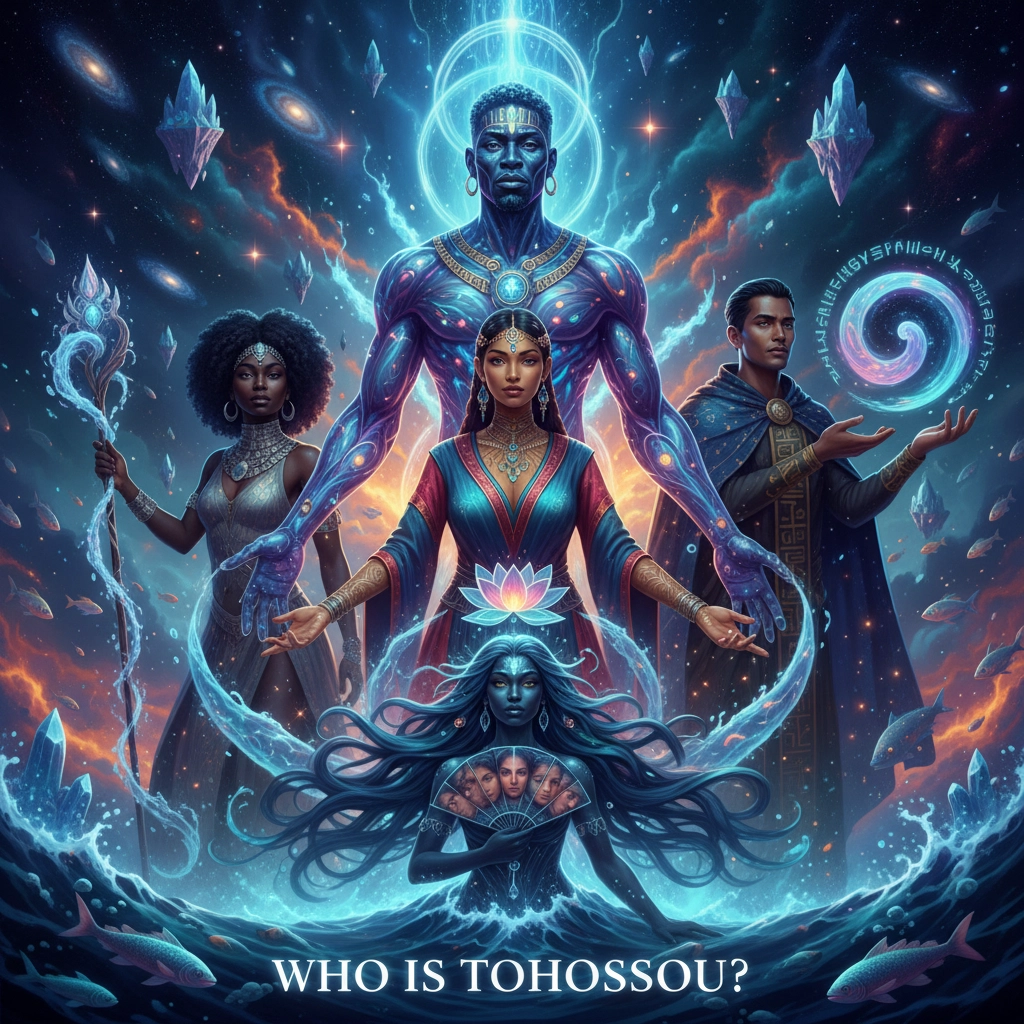
In traditional iconography, Tohossou appears as a figure of regal bearing, sometimes depicted with both masculine and feminine attributes, adorned in the red, white, and gold colors that signify royal status. The beadwork isn't just decoration: each bead, each pattern carries specific spiritual significance, marking this spirit as both healer and ruler, both gentle and commanding.
The sacred fish that often appear in Tohossou's imagery aren't random either. These represent the life force that moves through water, the fertility and abundance that this vodun can bestow, and the mysterious depths of knowledge that water spirits possess.
The Sacred Responsibility of Lost Children
Now we get to the part that might shake you up a bit, because Tohossou carries one of the most heartbreaking and sacred responsibilities in the vodun pantheon. This spirit has special dominion over children who die prematurely: stillborn babies, those born with severe malformations, and infants who pass before they even get their teeth.
Before you start feeling heavy about this, understand something: in traditional Beninese spirituality, death isn't the end of the story. When a child dies under these circumstances, they don't just disappear: they transform, potentially becoming Tohossou spirits themselves. The ceremonies performed for these children involve placing them in humid earth or returning them to water, sometimes in specially crafted clay coffins, acknowledging their transition to a different kind of existence.

This isn't about tragedy: it's about understanding that some souls carry destinies so powerful that they can't be contained in ordinary human form. The divination practices surrounding these situations, particularly through the Fâ oracle system, reveal whether a child carries the essence of Tohossou, and this knowledge shapes how the community responds to loss.
Are you starting to see why Tohossou demands such respect? This vodun doesn't just rule water: he governs the most delicate transitions between worlds, offering healing to families dealing with unimaginable loss while ensuring that powerful spirits find their proper place in the cosmic order.
Symbols and Sacred Objects
Let's talk about how you'd recognize Tohossou's presence or create appropriate altar spaces. The traditional symbol resembles a pipe with each end bent in different directions: think of it as representing the flow of spiritual energy that doesn't always move in straight lines. Water spirits, after all, understand that the most powerful currents often follow unexpected paths.
The colors associated with Tohossou carry deep meaning:
- Red: Royal power, life force, the blood that connects all living things
- White: Purity, spiritual clarity, the foam of sacred waters
- Gold: Divine authority, the value that transcends material wealth
- Deep blue: The mysteries of deep water, hidden knowledge, profound emotion
When creating sacred spaces for Tohossou, practitioners incorporate elaborate beadwork, representing the interconnectedness of all things and the patient craft required to build spiritual power. Sacred vessels filled with spring water or water from specific rivers become focal points for prayer and divination.

The figure supporting its chin that often represents Tohossou isn't just artistic choice: it represents contemplation, the deep thinking required to navigate the complexities of life and death, healing and transformation.
Royal Ceremonies and Healing Practices
In traditional Beninese practice, Tohossou ceremonies often take place at the intersection of royal and spiritual authority. This makes sense when you remember that in Dahomey, kingship carried divine responsibility, and water access was literally a matter of life and death for communities.
The healing ceremonies associated with Tohossou focus particularly on fertility issues and protection during pregnancy. People seeking Tohossou's intervention for having children don't just show up with simple requests: they engage in elaborate ritual preparations that might include specific fasting, water blessings, and community ceremonies that acknowledge both the power and responsibility involved in bringing new life into the world.
The vodounsi (priests and devotees) who serve Tohossou undergo extensive training not just in ritual practice, but in understanding the delicate spiritual dynamics around birth, death, and transformation. These aren't casual practitioners: they're dealing with some of the most profound spiritual territories you can imagine.
Sacred Sites and Shrines
Traditional Tohossou shrines often occupy prominent positions near water sources: riverbanks, lakeshores, areas where springs emerge from the earth. But we're also talking about shrines within royal compounds and healing centers, places where the intersection of political power and spiritual authority makes the most sense.
The architecture of these shrines reflects both royal and aquatic influences. You might see courtyards designed to channel rainwater in specific patterns, altars positioned to catch the first light reflecting off nearby water sources, and sacred pools maintained specifically for ritual purposes.

Contemporary shrines in Benin continue these traditions while adapting to modern circumstances. Urban vodounsi might create elaborate altar spaces that incorporate traditional symbols with contemporary materials, maintaining the essential spiritual connections while acknowledging changed physical environments.
Tohossou's Role in Modern Benin
Here's what's beautiful about traditional vodun practice: it doesn't get frozen in time. Tohossou worship continues to evolve within Beninese communities, addressing contemporary challenges while maintaining ancient wisdom. Modern practitioners might seek Tohossou's guidance for medical fertility treatments, protection during high-risk pregnancies, or healing from pregnancy loss: but always within the framework of traditional spiritual understanding.
The vodun temple communities that maintain Tohossou worship also preserve knowledge about water management, community health practices, and the kind of collective support systems that help families navigate both celebration and loss.
Understanding Sacred Boundaries
Before anyone gets ideas about casually invoking Tohossou, remember this: water spirits demand respect, and royal water spirits demand serious respect. This isn't a deity you approach lightly or without proper preparation, guidance, and understanding of the spiritual responsibilities involved.
The traditional protocols around Tohossou worship exist for good reasons. We're talking about a spirit whose domain includes the most profound transitions human beings experience: birth, death, fertility, loss, healing, and transformation. Casual approaches to such powerful spiritual territory can create serious complications.
If you feel called to learn more about Tohossou or traditional Beninese vodun practice, seek out authentic teachers, respect traditional protocols, and understand that this path requires genuine commitment to spiritual development and community responsibility.
The Royal Path Forward
Tohossou represents something our modern world desperately needs to understand: the sacred nature of water, the spiritual dimensions of fertility and loss, and the kind of royal spiritual authority that serves community healing rather than personal ego.
This vodun teaches us that true power flows like water: finding the right channels, nourishing what needs nourishment, and occasionally demonstrating the awesome force that water can unleash when boundaries are crossed or disrespected.
Ready to deepen your understanding of traditional African spirituality? The royal waters are calling, but remember; kings and queens don't bow to just anyone, and water spirits have long memories for both respect and disrespect.
