
Ever wondered why when you dive deep into African spiritual traditions, you keep seeing powerful women at the center of everything? That's not coincidence: that's centuries of spiritual wisdom being preserved, transmitted, and led by the mothers, priestesses, and knowledge keepers who've been holding it down long before anyone thought to give them "official" recognition.
Here's what's happening right now: the spiritual world is finally catching up to what practitioners have always known. Women aren't just participants in Vodun, Orisa, and Benin traditions: they're the backbone, the memory keepers, and often the most powerful spiritual authorities in the room.
The Truth About Women's Role in Vodun Traditions
Let me tell you something that might surprise you if you've only learned about Vodun from Hollywood movies or surface-level sources. In Benin, the birthplace of Vodun, women don't just participate: they literally make the whole thing possible.
During the annual Vodun Days festival in Ouidah, you'll see what real spiritual leadership looks like. Women are everywhere: organizing ceremonies, entering trance states to channel divine presences, preparing ritual materials, and making critical decisions about how traditions get passed down. As Dah Adoko Gbediga, president of the Union of Associations and Organizations of Endogenous Religions of Benin, puts it bluntly: "Without women both out there in the foreground and behind the scenes there would be no Vodun Days, nor voodoo. They are essential pillars."

Think about that for a second. Not "women are helpful" or "women contribute." Women ARE the tradition. They're the ones who've been quietly ensuring that these sacred practices survive colonization, modernization, and every other force that's tried to wipe them out.
Why Women Become the Ultimate Spiritual Intermediaries
Here's where it gets really interesting. In Vodun traditions, women serve as crucial intermediaries between followers and spiritual authorities. They're the ones who can "give thanks to the divinities for those who cannot." This isn't some honorary title: this is real spiritual power and responsibility.
When you're dealing with spirits, ancestors, and divine forces, you need someone who can actually bridge those worlds effectively. Women in these traditions have proven themselves as the most reliable channels, the most dedicated preservers of sacred knowledge, and the most trustworthy guardians of spiritual protocols.
Are you starting to see why this recognition is so important? These aren't just cultural roles: these are positions that require serious spiritual development, deep knowledge of medicinal plants, mastery of ritual procedures, and the ability to guide entire communities through their spiritual journeys.
The Power of Mambos and Iyalorisas: Real Spiritual Authority
Let's talk about titles that actually mean something. In Vodun practices across West Africa, particularly in Benin and Togo, mambos (priestesses) aren't playing around. These women preside over ceremonies, possess extensive knowledge of medicinal plants, and guide communities in worship and spiritual practice. They're not assistants to male priests: they ARE the spiritual leaders.

Similarly, in Yoruba traditions, women serve as priestesses of various Orisa, with female devotees called Iyalorisas conducting rituals, ceremonies, and divinations. When you're dealing with powerful Orisa like Osun, Oya, or Yemoja, you're often going to be working with women who have dedicated their lives to understanding these forces.
Stop for a moment and ask yourself: when was the last time you heard about the spiritual authority of African women in mainstream discussions of religion? Probably not often enough, right? That's exactly why this recognition matters so much.
Knowledge Transmission: The Real MVPs of Cultural Preservation
Here's something that'll blow your mind: while everyone's talking about preserving African spiritual traditions, women have been doing it all along. They're the ones responsible for transmitting knowledge, myths, and religious practices through storytelling. They're the living libraries of oral traditions that form the foundation of African religious life.
In Vodun contexts specifically, women play massive roles in organizing rites and are responsible for teaching and transmitting Vodun knowledge in convents to both young and old practitioners. They're not just memorizing information: they're actively ensuring that the next generation understands not just what to do, but why it matters and how to do it correctly.
This educational function goes way beyond just spiritual knowledge. We're talking about specialized expertise in medicinal plants, healing practices, and sustainable resource management: skills developed through centuries of observation and experience. These women are addressing physical ailments while nurturing holistic well-being, spiritual harmony, and cultural resilience within their communities.
The Divine Feminine: When Goddesses Reflect Reality
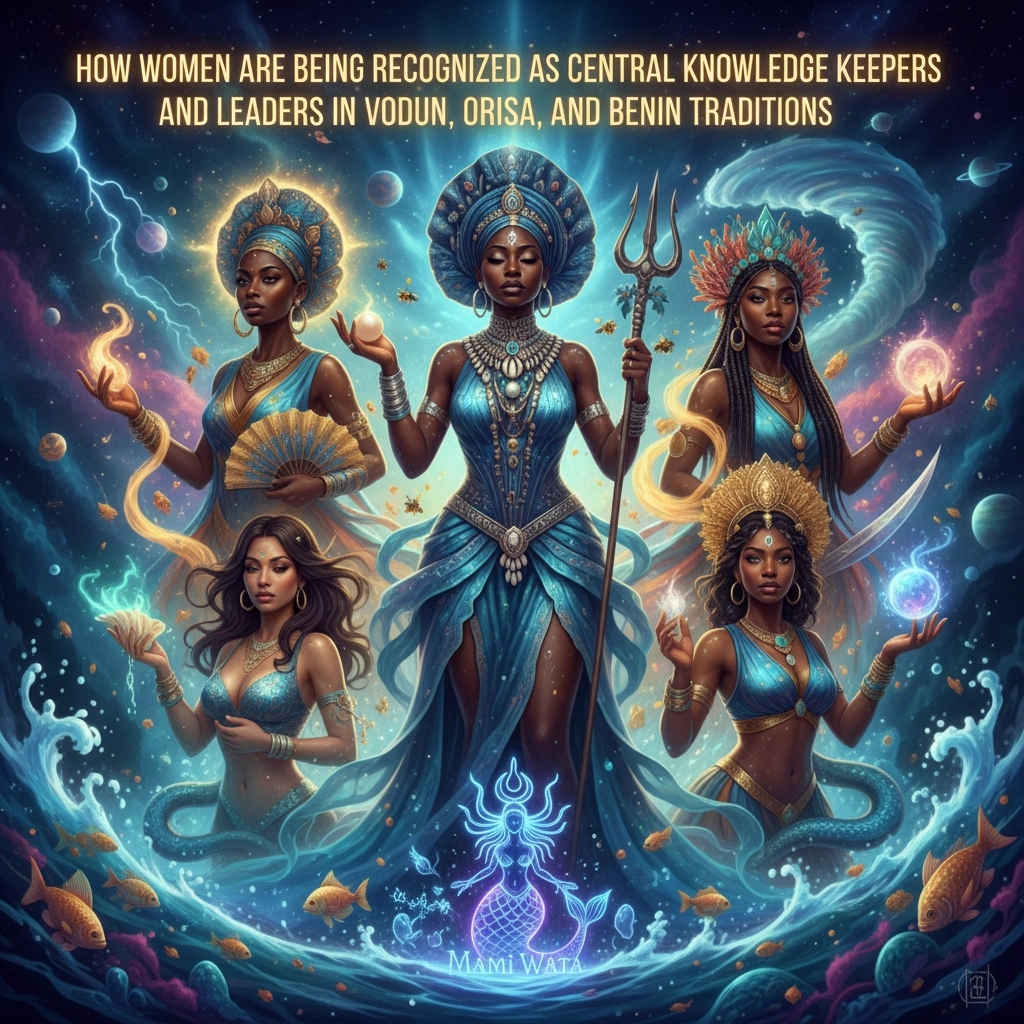
Want to know something beautiful? The recognition of women's central role in these traditions is reflected in the divine forces themselves. Female divinities like Mami Wata and Sakpata have dedicated festival celebrations that attract hundreds of participants, demonstrating continued reverence for feminine divine power.

Mami Wata, described as an aquatic deity representing both a nourishing mother and the destructive power of the ocean, isn't just a symbol: she's a reflection of the complex, powerful roles that women have always held in these traditions. When you see hundreds of people gathering for beach celebrations in her honor, you're witnessing the collective recognition of feminine spiritual authority.
Ready to stop underestimating the spiritual power that women bring to these traditions? Because the spirits certainly never have.
Official Recognition: About Time!
Here's some good news: cultural authorities are finally catching up to what practitioners have always known. Benin's Culture Minister Jean-Michel Abimbola now officially recognizes that missions assigned to women in voodoo rite organization are "numerous and important." This might seem like basic acknowledgment, but in a world where women's contributions are often minimized or ignored, official recognition is a crucial step.
But let's be real about the challenges that still exist. Local dignitary Suzanne Celeste Delaunay Belleville points out that while "women are present at all stages: at the beginning, in the middle and at the end," there's still a lack of representation of women within senior voodoo authorities. She notes that many women "have been brought up to remain in the shadows."
Does this sound familiar? Even in traditions where women are absolutely essential, they're still fighting for full visibility in formal leadership positions. The good news is that this is changing, and women are increasingly claiming their rightful places as recognized spiritual authorities.
Contemporary Leadership: Women Leading the Way Forward
Don't think for a second that this is just about preserving old traditions. Women are leading grassroots movements, advocacy efforts, and cultural revitalization projects aimed at preserving and promoting indigenous languages, arts, and crafts. They're fostering collaboration, empowerment, and intergenerational learning that ensures these spiritual traditions remain vibrant and relevant.

This leadership ensures the continued vitality and transmission of ancient spiritual traditions into contemporary contexts. These women aren't just maintaining traditions: they're actively adapting them, making them accessible to new generations, and ensuring they survive and thrive in modern contexts.
Are you ready to recognize and support the women who've been holding down these spiritual traditions all along? Because the spirits have been waiting for this recognition for centuries, and it's about time the rest of us caught up.
What This Recognition Really Means
This isn't just about giving credit where credit is due (though that's important). This recognition of women as central knowledge keepers and leaders in Vodun, Orisa, and Benin traditions represents a fundamental shift in how we understand African spirituality, authority, and wisdom transmission.
When we acknowledge women's roles as mambos, Iyalorisas, ritual organizers, knowledge transmitters, and spiritual intermediaries, we're recognizing a model of spiritual leadership that's been effective for centuries. We're validating ways of knowing, healing, and connecting with the divine that center community, relationship, and practical wisdom.
The women who've been preserving these traditions deserve more than just acknowledgment: they deserve support, resources, and the kind of respect that matches their contributions. And for anyone serious about connecting with these spiritual paths, understanding and honoring the women who guide them isn't optional: it's essential.
The ancestors are watching, the spirits are listening, and the women who've been holding it down are finally getting the recognition they've always deserved. It's about time we all paid attention.
